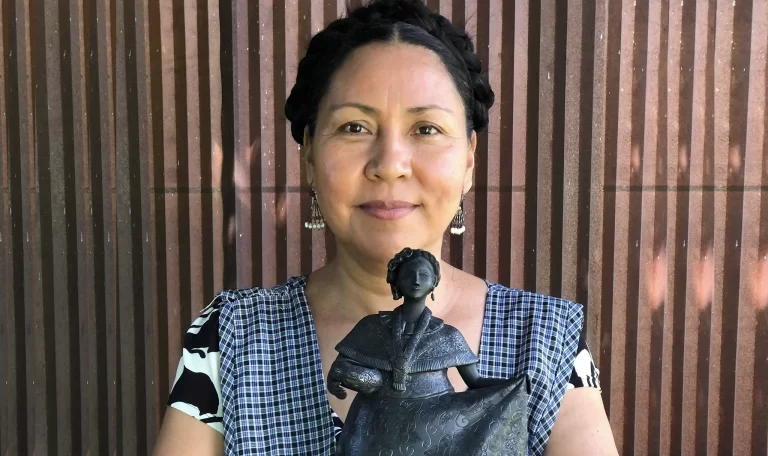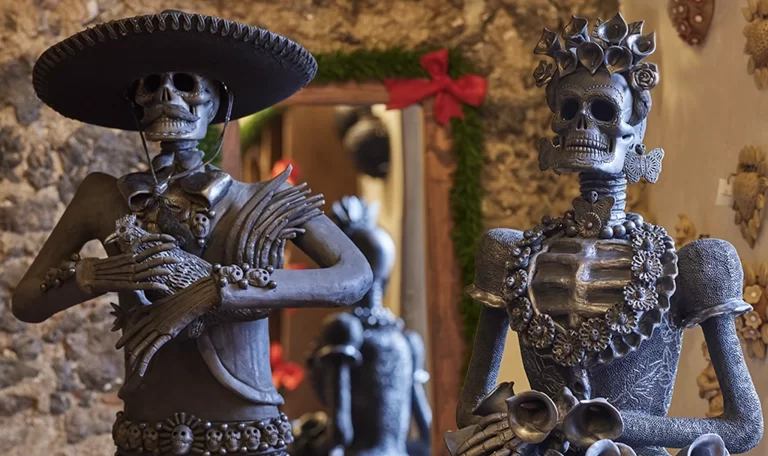
In the heart of Oaxaca, black clay is not only a craft: it is identity, memory and art. Born from the Zapotec land and molded by centuries of tradition, this clay acquires its purest form in San Bartolo Coyotepec, a town where each piece is testimony to a teaching that is passed down from generation to generation. Among all the artisans who have given life to this tradition, the master craftsman Carlomagno Pedro Martínez stands out, whose work is considered one of the most valuable and recognized in Mexican folk art. His work not only preserves centuries-old techniques, but also transforms them with a personal and profound vision, where history, symbolism and culture are intertwined in each figure.
Table of Contents
Charlemagne Pedro Martinez: heritage and artistic vision
Coming from a family of artisans, Carlomagno discovered in clay a way to give life to his ideas and emotions. From an early age he began modeling figures of Aztec warriors, Zapatistas and clowns, inspired by illustrations he found in books. However, his father encouraged him to explore other paths, to create something different. It was later, when he became involved with the carnivals of his community, that he found the thematic direction that would mark his work: the devil, demons, skeletons, death. It is not a fascination with the macabre, but a deep connection with his Zapotec heritage, where death is not feared, but celebrated as an essential part of the cycle of life.
Black clay: technique and ancestral tradition
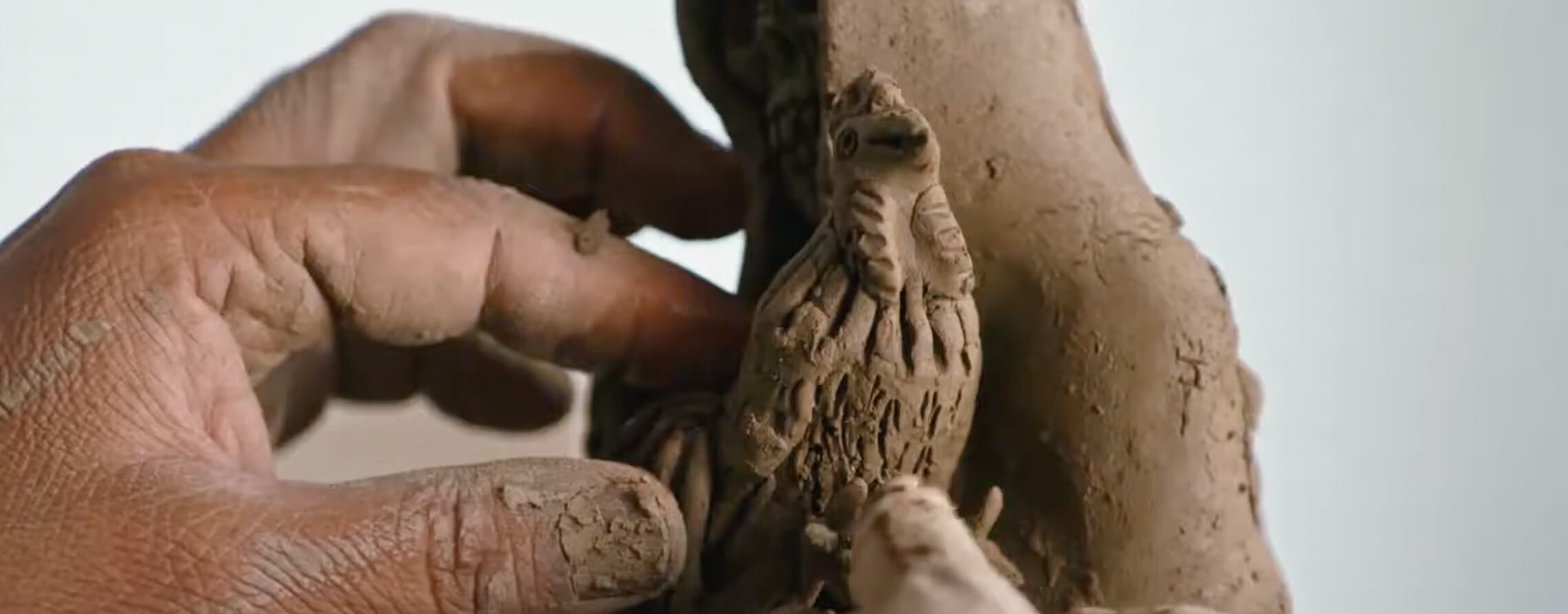
The clay with which master Carlomagno works comes from the place known as La Mina. From there, the earth is transported in sacks to his workshop, where he begins an ancestral ritual: first it is left to dry, then it is soaked and finally kneaded with hands or feet, as his ancestors did. Only when the clay reaches the ideal consistency, soft and malleable, Charlemagne begins to shape it entirely by hand, transforming this raw material into unique pieces. His father always taught him that each piece had to have life; they could not be static, they had to transmit a feeling, an emotion that spoke from the clay.
Firing: where the clay is transformed
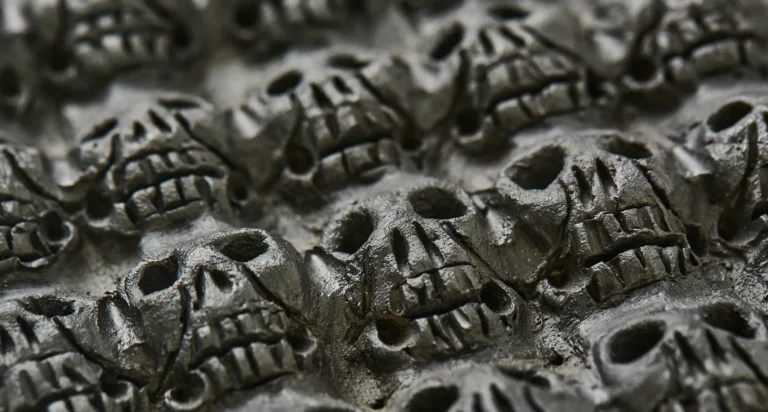
Before firing, the piece is burnished with quartz stones to close the pores of the clay. It is then left to dry in the shade, so that it loses moisture little by little, and then exposed to the sun to complete the drying process. The firing is done underground, in an open-air oven that is previously heated with firewood. Once the pieces are inside, the kiln entrances are sealed. This reduces oxygen during combustion, which results in the characteristic color and shine of the black clay.
“The Three Gentlemen”: a play with memory
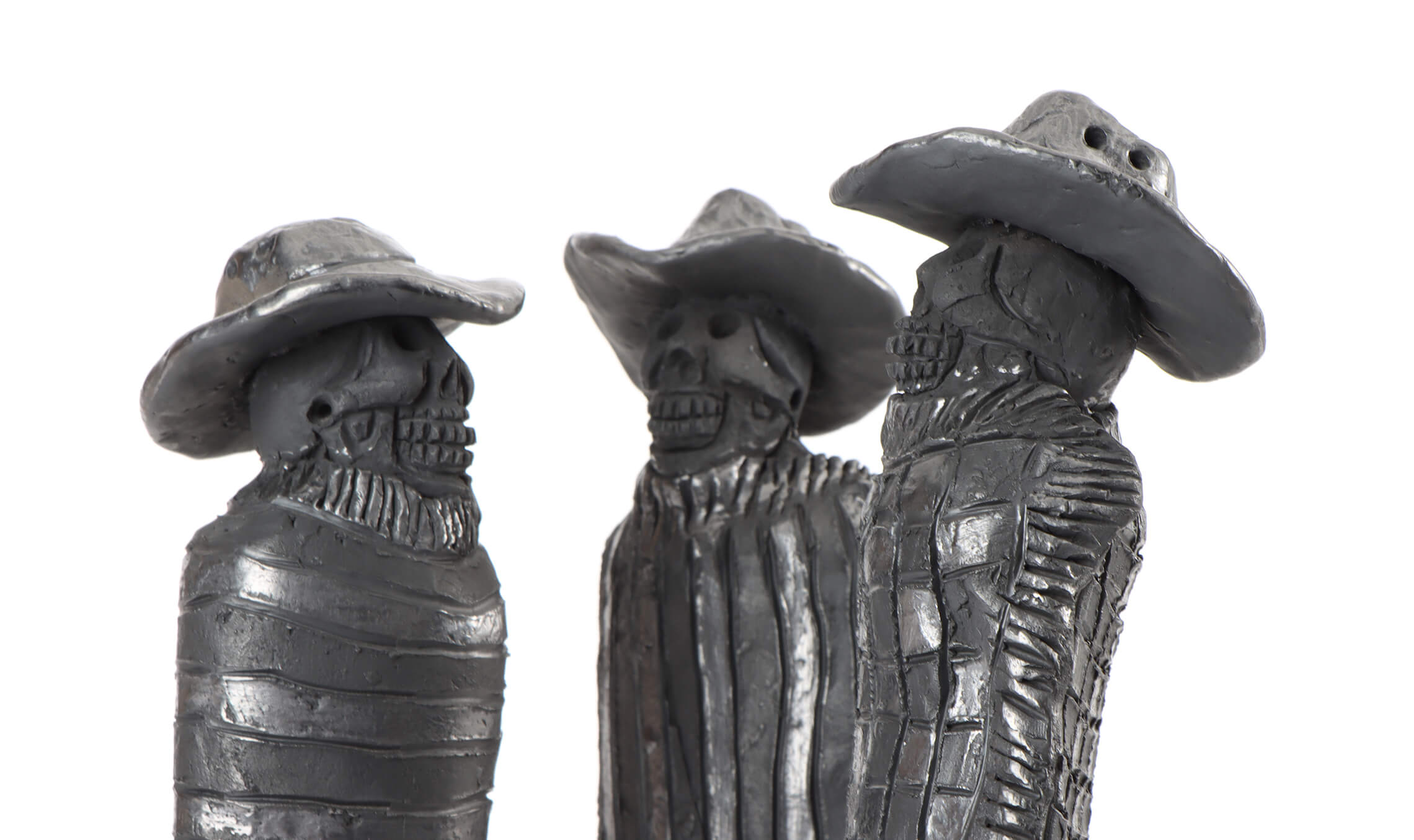
Let us now turn our attention to the piece, The Three Gentlemenwho represent the author, his grandfather and his great-grandfather. Three calacas dressed in zarape and sombrero gather in a silence that seems to speak. They look at each other as if sharing an ancient secret, one that is not said with words, but with memory. Perhaps they discuss the recipe for the perfect fire or the exact point at which the clay comes to life.
Charlemagne: his imaginary transcends frontiers
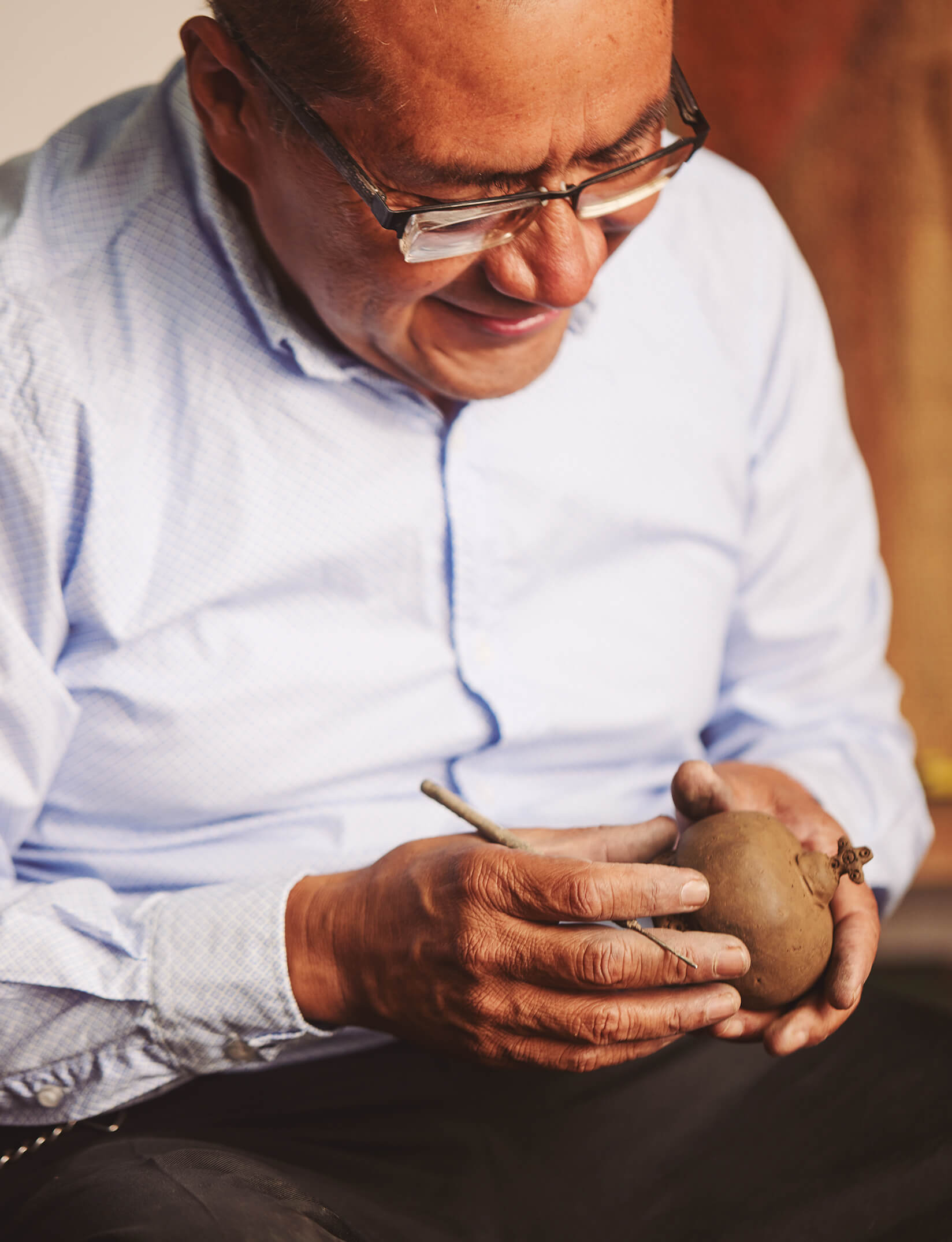
The scene seems simple, but it holds something profound. The three gentlemen are a representation of the Zapotec legacy that lives in the work of the hands. Carlomagno Pedro Martínez has taken this legacy beyond San Bartolo Coyotepec: his first individual exhibition was in 1983, at the Casa de la Cultura Oaxaqueña. Since then, his work has been part of important group exhibitions, such as “Las artes plásticas oaxaqueñas” at the Instituto Nacional de Bellas Artes (INBA) and the Encuentro Nacional de Arte Joven in Aguascalientes. He has also exhibited in outstanding spaces such as the Mexican Fine Arts Center Museum in Chicago, the Lumiere Sculpture Park in Missouri, and Estudy 24 in San Francisco. He was invited by artist Francisco Toledo to participate in the exhibition The Indians: Chiapas-Mexico-California at La Villette, Paris. In 2004 he took his work to the International Contemporary Art Fair (ARCO) in Spain. His talent has also taken him to countries such as Switzerland, Germany and Austria, and he has been awarded a scholarship by the Study Clay Foundation in Philadelphia, which specializes in high-level ceramics. Through his pieces, Oaxacan black clay continues to tell its story around the world.