Oaxaca, Mexico, is a vibrant state, full of color and tradition. In his heart beats strongly The Guelaguetza, the greatest celebration of indigenous and mestizo culture in Latin America. It is a festival that transcends time and celebrates the union, reciprocity and cultural diversity of its original peoples. . In this article we invite you to explore the rich history of the Guelaguetza, its profound significance and its impact on contemporary Mexico.
Table of Contents
What does the word Guelaguetza mean? An ancestral legacy.
In the region of the Isthmus of Tehuantepec, it is believed that the term guelaguetza comes from the Zapotec word guendaizaá, which refers to “an attitude, a quality with which one is born; a feeling through which the Zapotec accepts, serves and loves his fellow man; it is the feeling of kinship, of brotherhood, of sharing with all brothers the best of nature and life” (Briseño, 2007, p2). More than a festival, the Guelaguetza is an expression of brotherhood and solidarity among Oaxacan communities, which they have managed to share with the rest of the world.
Deep roots: the origin of the Guelaguetza.
This celebration has its origin in the ancient rituals dedicated to Centeótl, god of corn, and Xilonen, goddess of tender corn. In their honor, pre-Hispanic peoples performed dances, songs and shared food. Every year, the communities climbed Cerro Guardián to pay tribute to their gods (Ayala Partida, p.1).
During the conquest, the celebrations dedicated to the corn gods were transformed by the colonizers. Seeing that the indigenous peoples continued to gather at the Cerro del Fortín, they established the feast of the Virgen del Carmen on July 16, to coincide with the dates of the pre-Hispanic celebrations. If July 16 did not fall on a Sunday, the feast was celebrated on the following Monday. Afterwards, another celebration was held on the following Monday. That is why it was called Lunes del Cerro.
Between 1928 and 1930, the government of Oaxaca sought to revive the ancient pre-Hispanic festivities. It was in 1932, on the occasion of the 400th anniversary of the city of Oaxaca, when men and women of the state organized a tribute, in which representative groups from the seven regions participated with traditional dances, a festivity that is now repeated year after year, but now with the eight regions (Briseño, 2007, p1).
The heart of the Guelaguetza: Cerro del Fortín.
The Guelaguetza is celebrated mainly in the city of Oaxaca de Juárez, on the Cerro del Fortín, where today the Guelaguetza Auditorium is located. As time went by, the celebration grew so much that the first spaces used for the festivities became too small for the large number of visitors. In response to this need, in 1974 the current auditorium was built on the same hill, and since then it has become the main stage of this great festival. Even so, the Guelaguetza extends throughout the state, with communities sharing their dances, traditional costumes and music, showing the enormous cultural richness and diversity of Oaxaca.
How the Guelaguetza is celebrated: Music, dance and tradition.
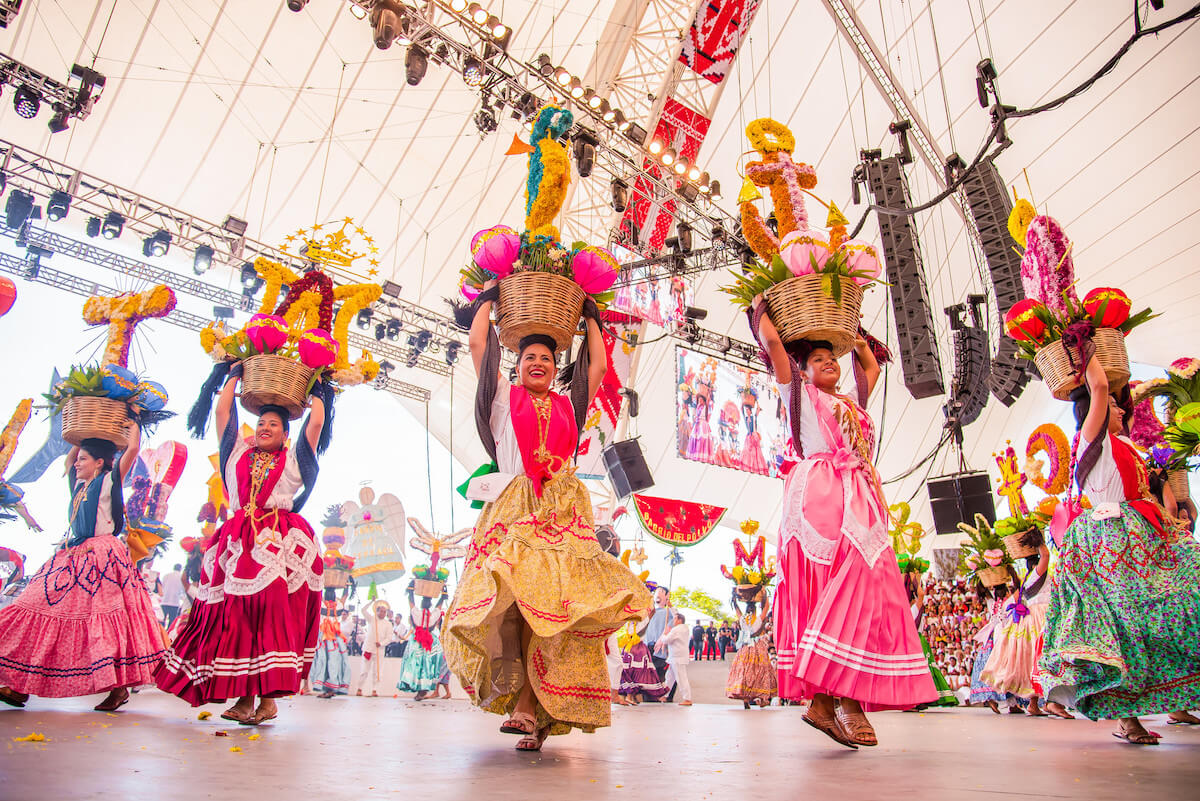
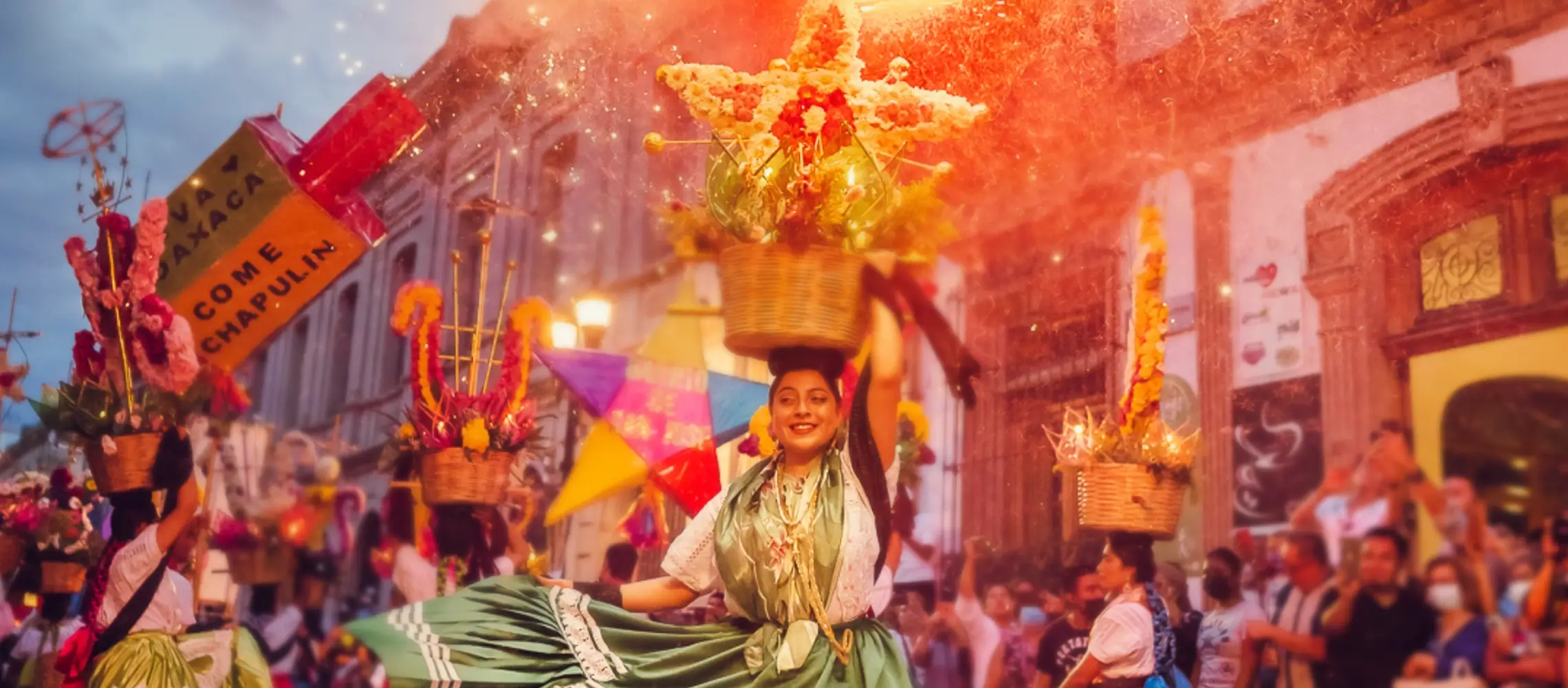
During the Guelaguetza, delegations from the eight regions of Oaxaca -Cañada, Costa, Istmo, Mixteca, Papaloapan, Sierra Norte, Sierra Sur and Valles Centrales- gather to proudly share their music, dances and traditions. Each group elegantly wears the typical costumes of their community and performs dances to the rhythm of traditional tunes and melodies. The musical framework is full of emblematic pieces such as Jarabes del Valle, La Tortolita Cantadora, Flor de Naranjo, Flor de Lisy, and the famous Flor de Piña. At the end, each delegation offers its Guelaguetza to the public: a show of generosity that includes fruits, handicrafts, drinks and other typical products, as a symbol of reciprocity and community.
As part of the celebration of Lunes del Cerro, since 1968 each delegation chooses a candidate to represent the Centeolt Goddess. The winner is named in a public ceremony and has the honor of presiding over the festivities. This year, the chosen one was Patricia Casiano Zaragoza, a Mazatec woman from Huautla de Jiménez, who moved her community with the message: “Today I want to tell all the boys and girls of all the towns, congregations, agencies: dream, exaggerate, create big imaginations, believe in yourselves, because all dreams can be achieved”.
Flor de Piña: identity and tradition from Papaloapan
One of the most emblematic and awaited moments of the Guelaguetza is the presentation of the “Flor de Piña” dance, performed by women from San Juan Bautista Tuxtepec. This number proudly celebrates the indigenous identity of the Papaloapan region and is distinguished by its energy, color and deep symbolic charge.
The dancers wear colorful traditional huipiles, leather huaraches, refajos, necklaces, earrings, bracelets and wool or ribbon tlacoyales, in addition to carrying a pineapple, symbol of fertility and prosperity, on their shoulders. At the beginning of the presentation, a poem dedicated to the women of Tuxtepec is recited, followed by a dynamic and perfectly synchronized choreography, in which 36 dancers move with impressive coordination, as if they were one.
This dance was created by the teacher Paulina Solís Ocampo and debuted at the Guelaguetza on July 21, 1958. Its intention was to highlight Oaxacan cultural authenticity, moving away from the influences of the Jarocha tradition, and to pay homage to the indigenous roots of the region (Vásquez Urdiales, 2023). In addition to its aesthetic beauty, “Flor de Piña” represents a courtship: a dance in which women proudly carry the pineapple as a symbol of life and abundance.
Impact of the Guelaguetza: a reflection of cultural resilience
The Guelaguetza has an important impact on Oaxaca’s culture and tourism, attracting thousands of visitors from around the world and generating key income for the local economy. It also strengthens the sense of identity and belonging of Oaxacan communities, promoting the preservation of their traditions and cultural heritage. For this reason, it is essential to value and respect not only the native communities of Oaxaca, but all those that exist in Mexico and the world. We must recognize their knowledge, honor their work and avoid any form of discrimination. We must not only see Oaxaca as a tourist product, but also deeply respect its customs and its people.
A little piece of Oaxaca in Mexico City
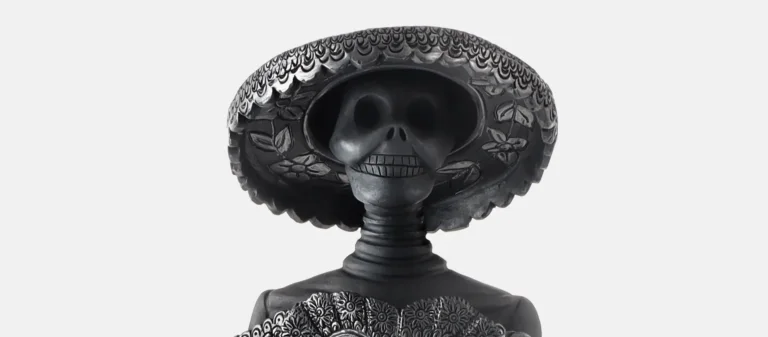
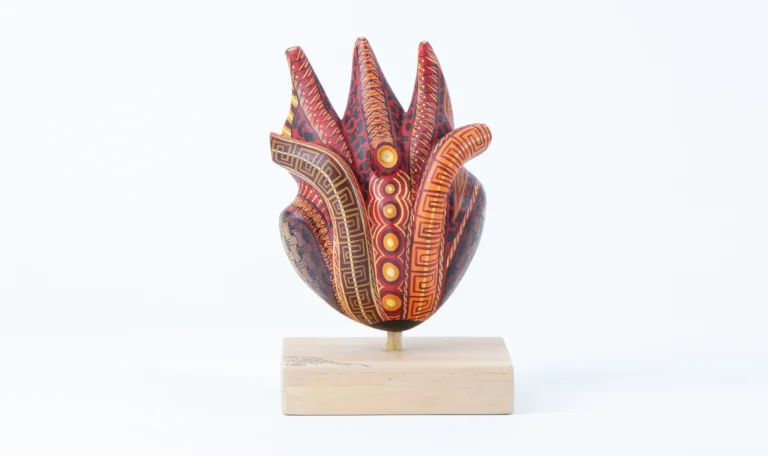
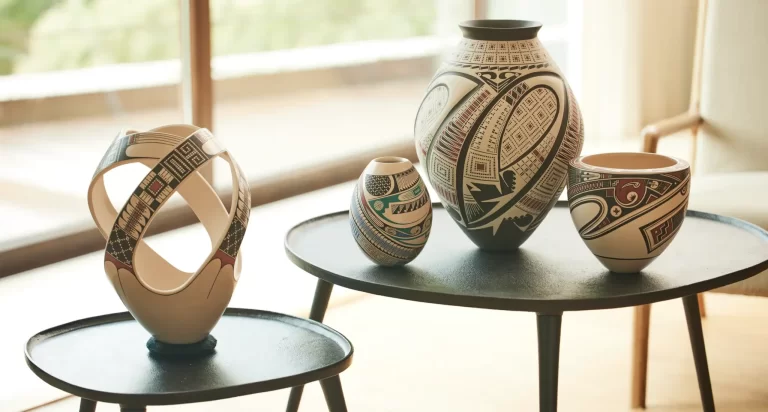
As part of the Guelaguetza celebrations, DeCorazón México invites you to visit the gallery and enjoy our commemorative decoration, as well as the special pieces that pay tribute to this great Oaxacan celebration. Among them stands out Sirena Tehuana, creation of the master Magdalena Pedro Martínez, recognized for her extraordinary work in black clay. Magdalena takes care of every detail of the garments that dress her figures, with the intention of preserving in her art those traditional costumes that many women no longer wear. You can also admire the Calenda Doll, inspired by the traditional mojigangas -giant dolls that animate the calendas-, and the Tuxtepecan Woman from Ixcatlán, who with her pineapple on her shoulder evokes the emblematic Flor de Piña dance. Come and meet them and celebrate with us the cultural richness of Oaxaca!
Conclusion
The Guelaguetza is not just a celebration for a few days; it is a way of life that reflects the deepest values of the Oaxacan people: generosity, respect, community and memory. Beyond the color and music, this festival reminds us that sharing who we are with others strengthens the dignity of our people. Approaching the Guelaguetza is a gesture of recognition and gratitude to those who, generation after generation, keep the cultural richness of Oaxaca alive.
References
Ayala Partida, J. (n/d). La fiesta de la guelaguteza. Technological Institute of Sonora. https://www.itson.mx/docs_nota/la-fiesta-de-la-guelaguetza.pdf
Briseño, P. (2007, July 23). La Guelaguetza. Excélsior. https://www.geocities.ws/isf_mx/Documentos/guelaguetza.pdf
Vásquez Urdiales, A. D. (2023, July 13). Flor de Piña, an emblematic legacy of Oaxacan culture. Quadratín Oaxaca. https://oaxaca.quadratin.com.mx/flor-de-pina-un-legado-emblematico-de-la-cultura-oaxaquena/