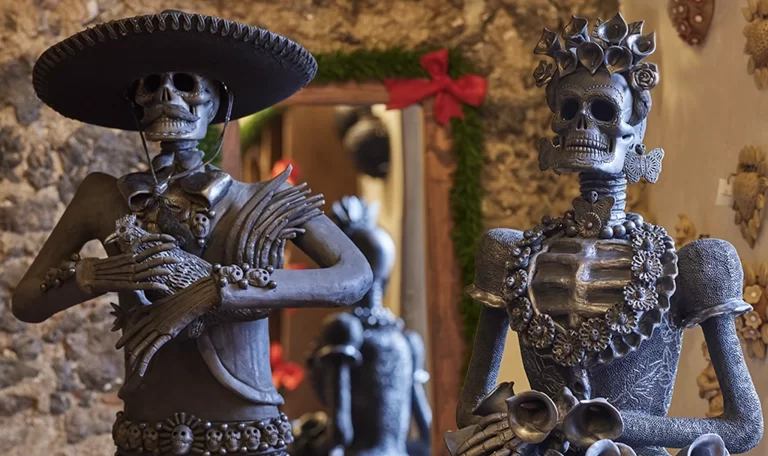
Corn, more than a simple grain, is the very essence of Mexico. Its history is intertwined with that of its native peoples, their beliefs and their art. On September 29th, Mexico celebrated National Corn Day, a date that invites us to reflect on the importance of this sacred grain.
That is why at DeCorazón México we want to introduce you to a work by the renowned Oaxacan artist Carlomagno Pedro Martínez, in which corn takes on a new dimension, becoming a symbol of identity, resistance and offering. In this blog we will explore the deep connection between corn and Charlemagne’s art, unraveling the ancestral meanings that lie in his creations.
Table of Contents
Table of Contents
Pitao Cozobi: the legend of the Zapotec god of corn
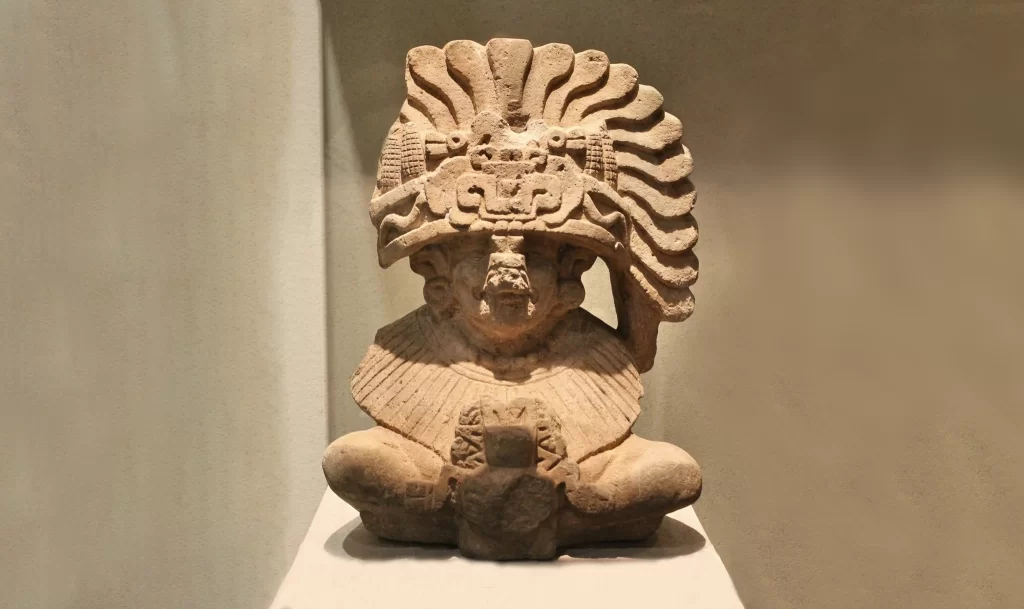
In the Zapotec cosmovision, Pitao Cozobi is the god of corn, a deity central to the survival, prosperity and balance of the community. Legend has it that he was born from the heart of the earth, emerging as a powerful being full of life, charged with guiding men in the cultivation of corn. He is attributed with the gift of teaching how to plant, care for and take advantage of this food, which not only nourished the body but also sustained the social and spiritual life of the community.
Pitao Cozobi personifies the fertility of the earth, the abundance of harvests and the sacred relationship between humans and nature. His figure reflects the deep connection that Mesoamerican peoples established between agriculture, survival and the structure of the universe: corn was not simply a food, but a symbol of life, renewal and cosmic balance. Through his teachings, the Zapotecs understood that caring for the land and its crops was also an act of respect for the ancestors and for the natural cycles that guarantee the continuity of life.
Thus, Pitao Cozobi not only embodies the richness of the land and the fecundity of its crops, but also represents the centrality of corn in the cultural and spiritual identity of the peoples of Oaxaca and Mesoamerica in general, reminding us that this food has been, since ancient times, much more than sustenance: it is a link between the human, the natural and the divine.
Corn: more than a food, a pillar of culture
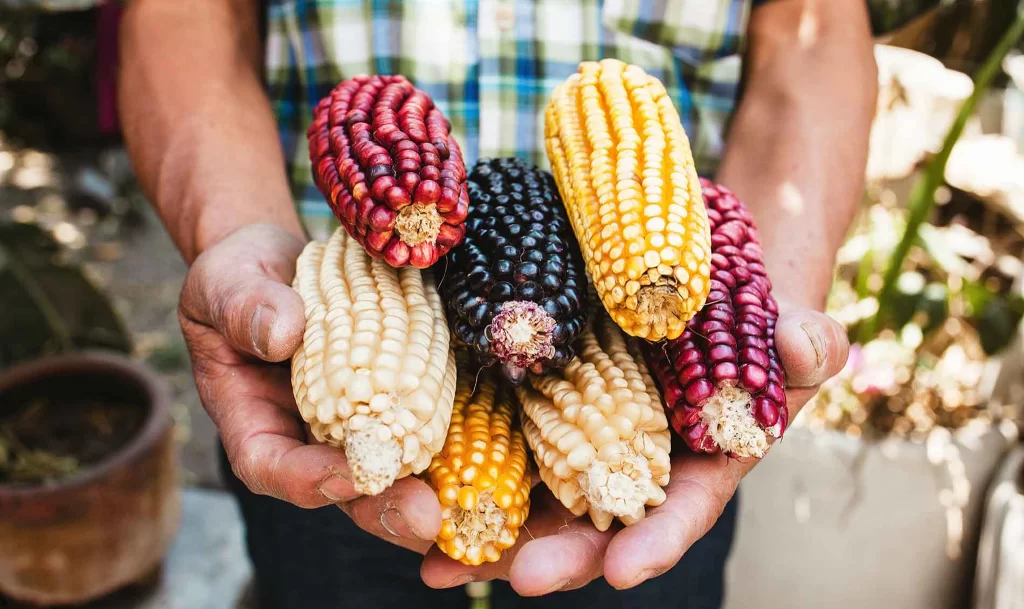
Corn has been the staple food in Mexico for millennia. Its domestication and cultivation transformed the lives of pre-Hispanic civilizations, allowing the development of complex societies and the creation of unique cultural expressions. Beyond its nutritional value, corn has a deep symbolic meaning: it represents life, fertility, abundance and connection with ancestors. Ceremonies and rituals related to corn are an integral part of Mexican cultural identity.
Tzompantli: a link between life and death
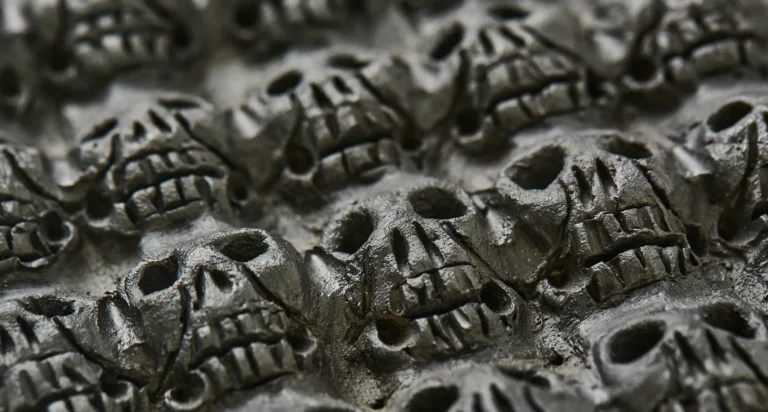
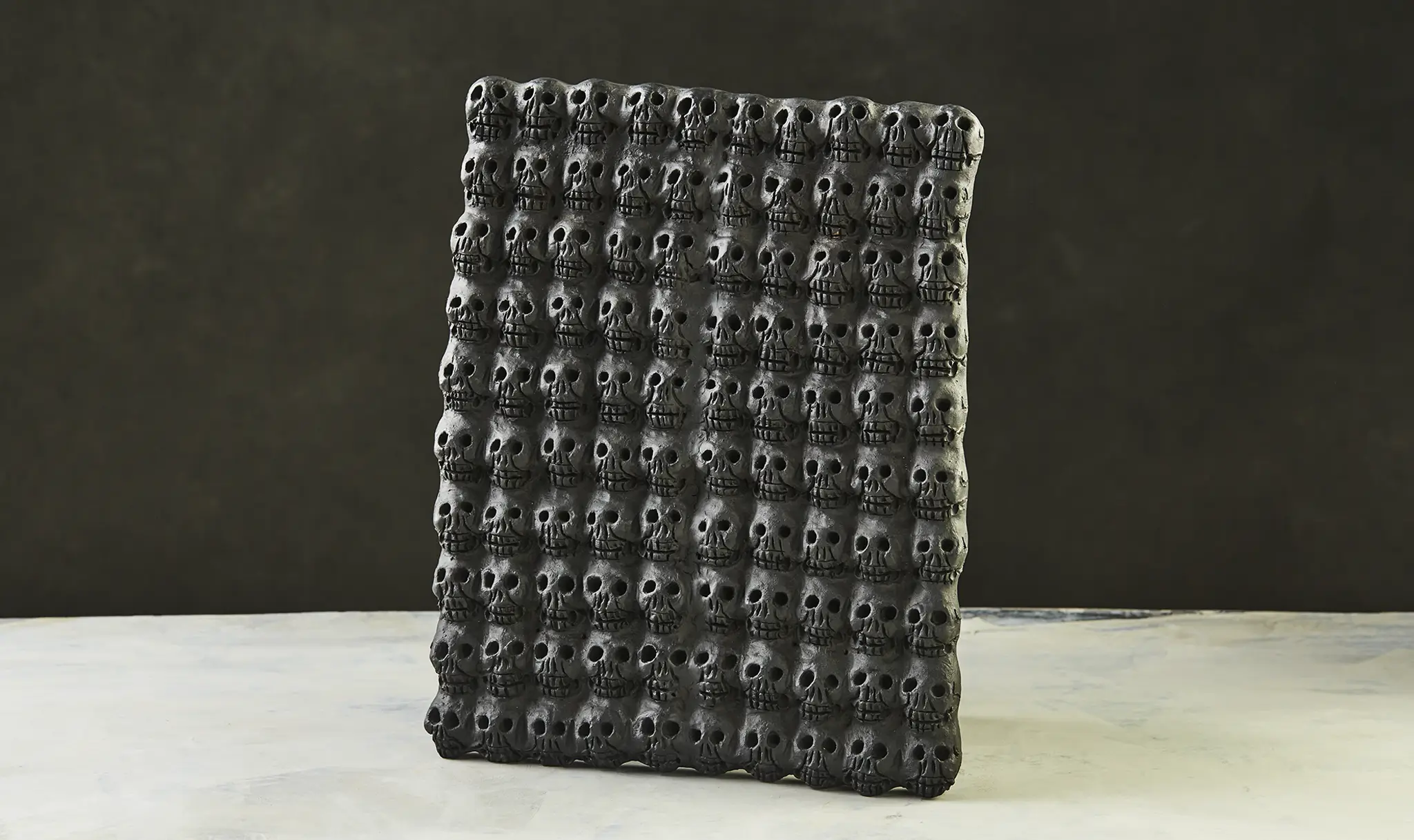
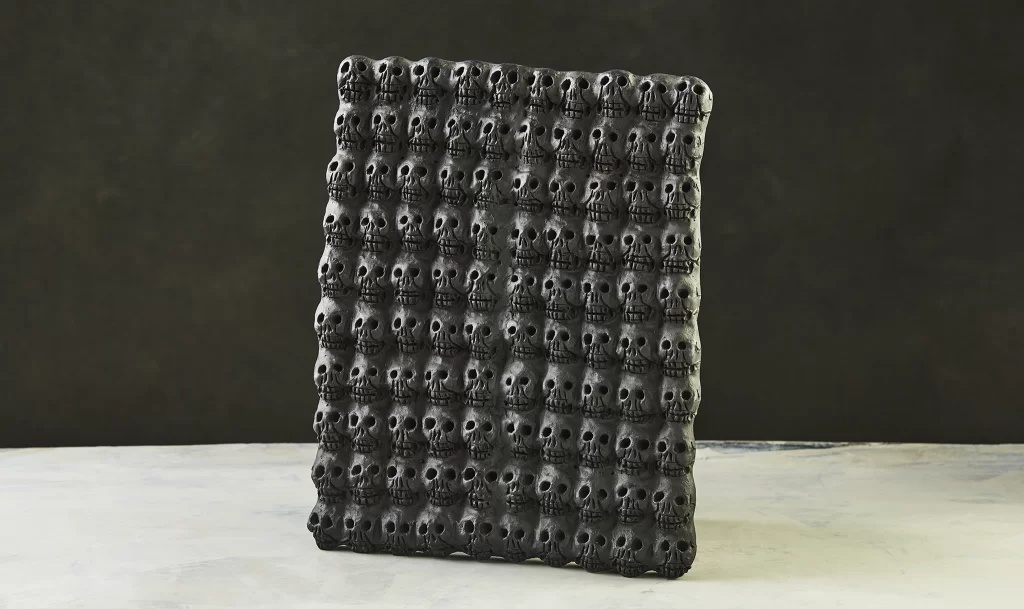
The tzompantli was a pre-Hispanic structure used by ancient Mesoamericans to display the skulls of sacrificed people, strung on wooden poles in full view of the entire community. Although at first glance it may seem macabre, its meaning was deeply religious and cosmological: it symbolized the duality between life and death, the fertility of the earth and the eternal cycle of regeneration. The word tzompantli comes from the Nahuatl tzontli, meaning head or skull, and pantli, meaning row or row; hence its translation as “row of skulls”. Curiously, this name is also applied to a tree whose fruit is the flower known as colorín, which is edible.
Far from being a simple monument to death, the tzompantli functioned as an altar that connected the community with the gods and ancestors. The skulls were an offering that guaranteed the continuity of life, the fertility of the earth and the cosmic balance. According to archaeologist Raúl Barrera Rodríguez, “it is important to know the meaning of religion and death for pre-Hispanic peoples.
In Mesoamerican cosmogony, men existed to worship and feed the gods with offerings; it was a condition for life to continue.” In this way, the tzompantli not only warned enemies, but also celebrated life and reminded the community of the sacred connection between the human, the divine and nature.
“Mazorca de barro negro”: a contemporary altar to tradition
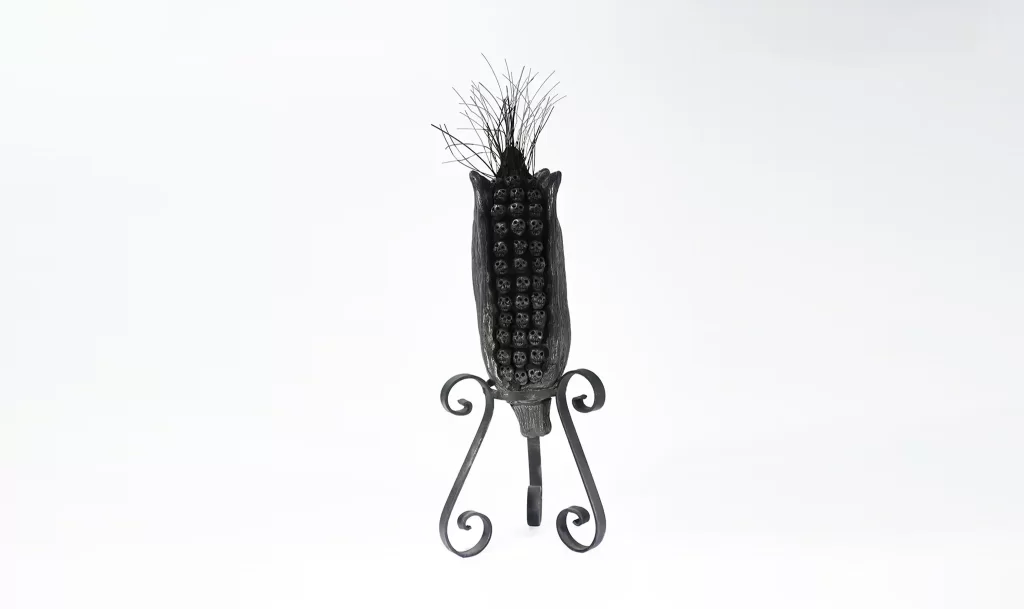
The work Mazorca de barro negro by Carlomagno Pedro Martínez is a modern reinterpretation of the pre-Hispanic altars dedicated to corn. With his characteristic black clay, the artist depicts the cob as a sacred object, a symbol of fertility and abundance.
The piece evokes the cultural richness of Oaxaca and the deep connection between man and earth. Like the tzompantli, Charlemagne’s black clay Mazorca can be interpreted as an altar to life, a tribute to the fertility of the earth and an offering to corn, the food that sustains the Mexican people. This work of art is a reminder of the importance of preserving ancestral traditions and valuing the cultural legacy that has been passed down to us.
The mud ritual
Master Carlomagno works the black clay following an ancestral tradition that begins in La Mina, from where the earth is transported to his workshop. There he begins a ritual process: first it is left to dry, then it is soaked and carefully kneaded with hands or feet until a soft and malleable texture is achieved, ready to be molded completely by hand. Each piece seeks to transmit life and emotion, following her father’s teaching that clay should speak for itself.
To achieve the characteristic finish, the pieces are burnished with quartz stones and allowed to dry gradually in the shade before being exposed to the sun. Finally, firing is done in an open-air kiln buried underground and heated with wood; by sealing the entrances, oxygen is reduced and the deep luster and distinctive color of black clay is obtained.
Conclusion: the perpetual legacy of maize in art
The work of Carlomagno Pedro Martínez is a testament to the power of art to connect the past with the present, preserve traditions and celebrate the cultural richness of Mexico. Corn, as the central symbol of his work, reminds us of the importance of valuing our roots, honoring our ancestors and protecting our country’s biodiversity. La Mazorca de barro negro is a contemporary altar to an ancient tradition, an offering to life and an invitation to reflect on our relationship with nature and our cultural heritage.
References
Authentic Oaxaca (2023). Zapotec Gods of Oaxaca: A Journey through Ancient Mythology. https://oaxacaautentico.com/dioses-zapotecas-de-oaxaca-un-viaje-por-la-mitologia-antigua/
Autonomous University of Tamaulipas (n.d.). What was the Tzompatli? http://www.uat.uan.edu.mx/paginas/Tzompantli.html
Vela, E. (2019). The symbolism of maize. Arqueología Mexicana, 38, 28-33. https://arqueologiamexicana.mx/mexico-antiguo/simbolismo-del-maiz