In Oaxaca, every thread tells a story. Their rugs and textiles not only decorate: they keep traditions, ancestral techniques and the memory of those who weave them. In DeCorazón México we share a special selection of these handmade pieces, unique for their origin and process.
In this blog we will explore how these fabrics are born, from the sourcing of the wool to the creation of patterns full of symbolism.
Table of Contents
Teotitlán del Valle: Cradle of Oaxacan Textiles
The pedal loom is considered to have originated in China and was later perfected in Europe around the 11th century, before arriving in Mexico in the 16th century with the Spanish colonization. Before its introduction, communities in the region worked mainly with backstrap looms and cotton. With the arrival of the Spaniards, wool replaced cotton, the treadle loom displaced the backstrap loom and new tools such as the spinning wheel were incorporated (Alonso, 2024).
Located in the heart of the Central Valleys of Oaxaca, Teotitlán del Valle is a Zapotec town recognized worldwide for its textile tradition. Here, textile making is a way of life: an art learned and perfected over the years.
The handmade process: From wool to the carpet
The elaboration of an Oaxaca rug is a meticulous and laborious process that requires skill, patience and dedication. From the selection of the wool to the final finishing, each stage is carried out with care and attention.
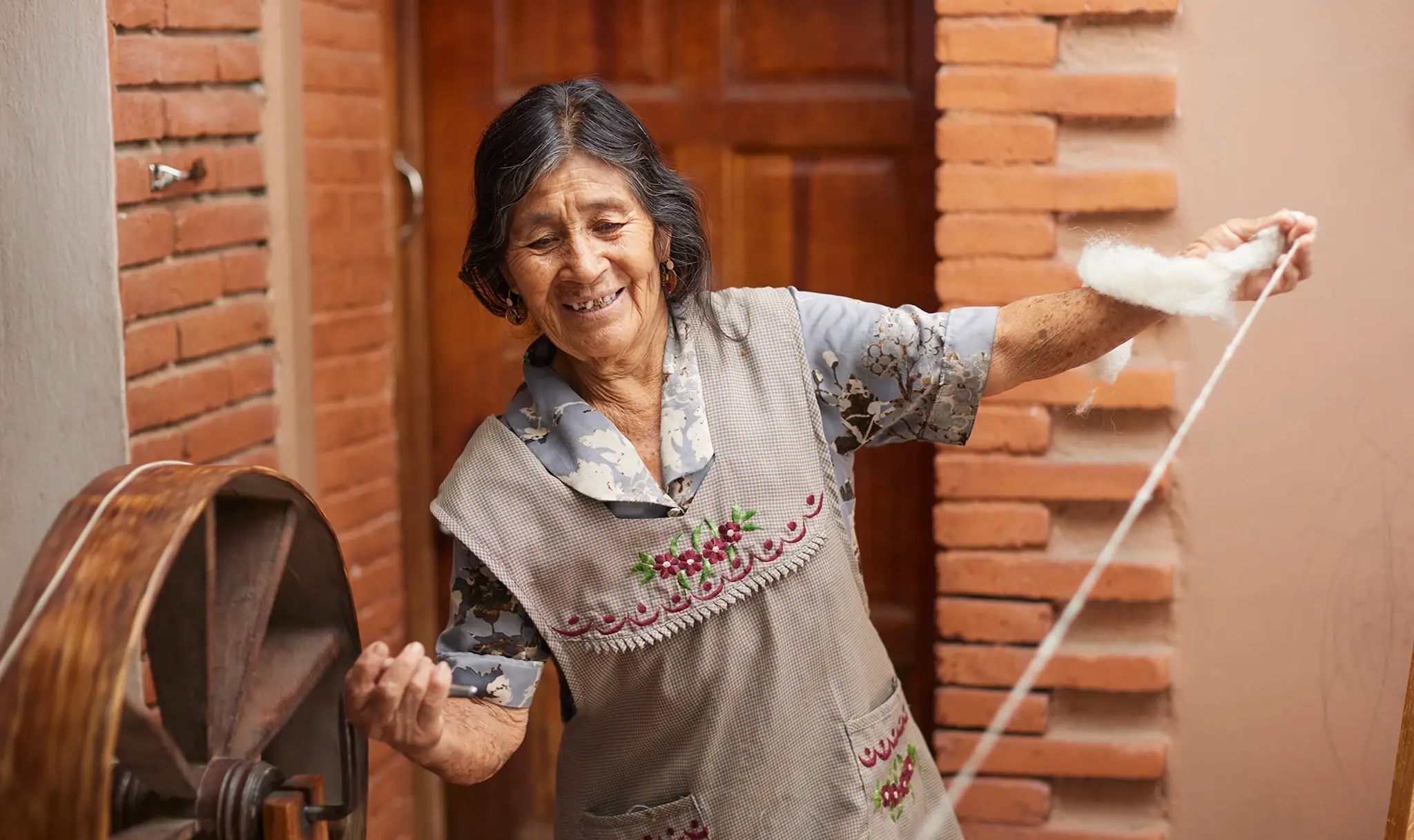
The process begins with the selection of the wool, which must be of excellent quality to ensure the durability of the rug. The wool is then washed and carded to clean impurities and align fibers. It is then spun by hand or with a spinning wheel into yarn ready for weaving.
The spun wool is dyed with natural dyes extracted from plants, insects and minerals. This step is crucial to give life and color to the rug and requires extensive knowledge of the properties of each dye.
Once dyed, the wool is placed on spools and prepared for the treadle loom. The weaver interweaves the yarns to create traditional or original designs with precision and mastery.
Natural dyes: colors of nature
One of the most distinctive characteristics of Oaxacan rugs is the use of natural dyes, which offer a soft, harmonious and ecological color palette.
Artisans use a wide variety of dyes, each with its own history and symbolism:
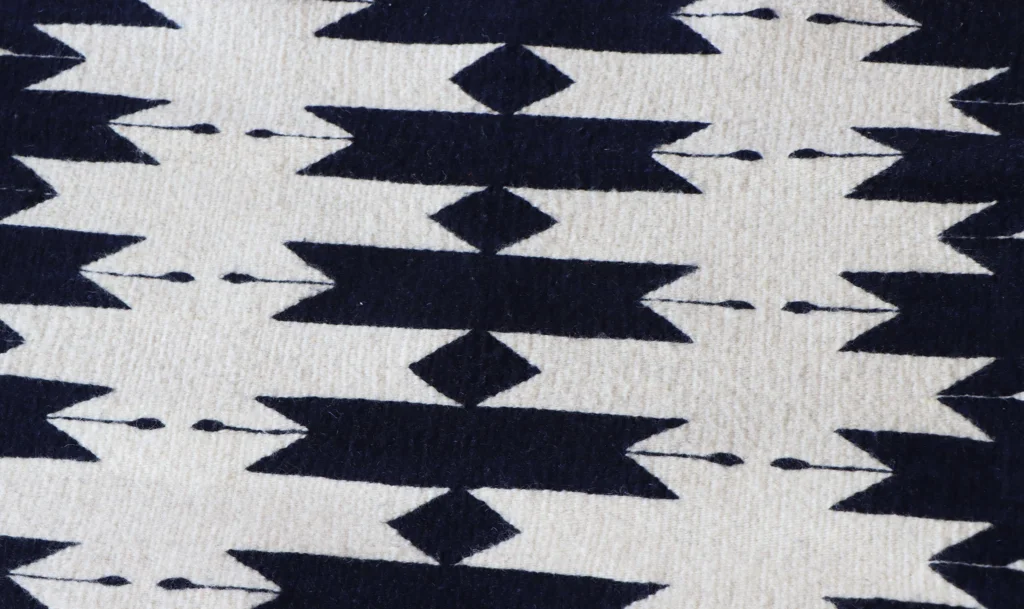
- Gray and black: Gray is achieved by mixing black and white wool from different sheep. To obtain a deep black, the ahuizache pod is used, which is crushed and boiled with the yarn and a little salt to fix the color.
- Yellows and ochers: The ocher tones come from rock moss, varying according to the amount used. For a more vivid yellow, marigold flowers are used.
- Browns: Brown tones are obtained from walnut shells.
- Blue: Blue is dyed with indigo, a natural charcoal-like pigment.
- Reds and purples: The grana or cochineal, a cactus insect, produces intense reds and also purple tones.
- Purple: Purple is extracted from the tishinda, a marine snail (Oaxaca Mío, n.d.).
The treadle loom: the technique
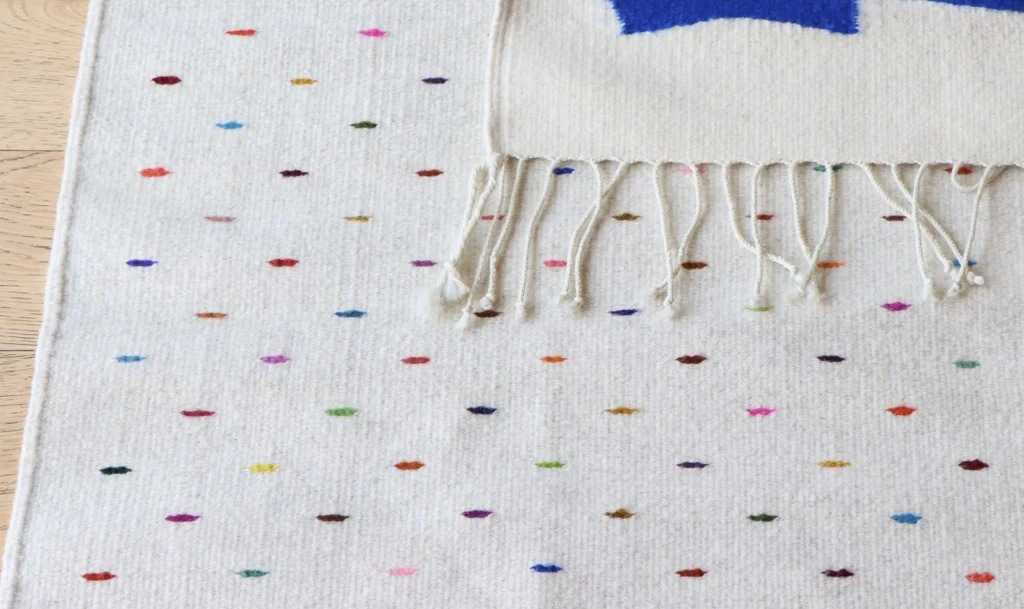
This loom consists of a wooden frame where the warp threads are stretched. The weaver, seated in front of the loom, operates the pedals to raise and lower the threads, creating a space through which the weft passes. With each pass, the mat design comes to life.
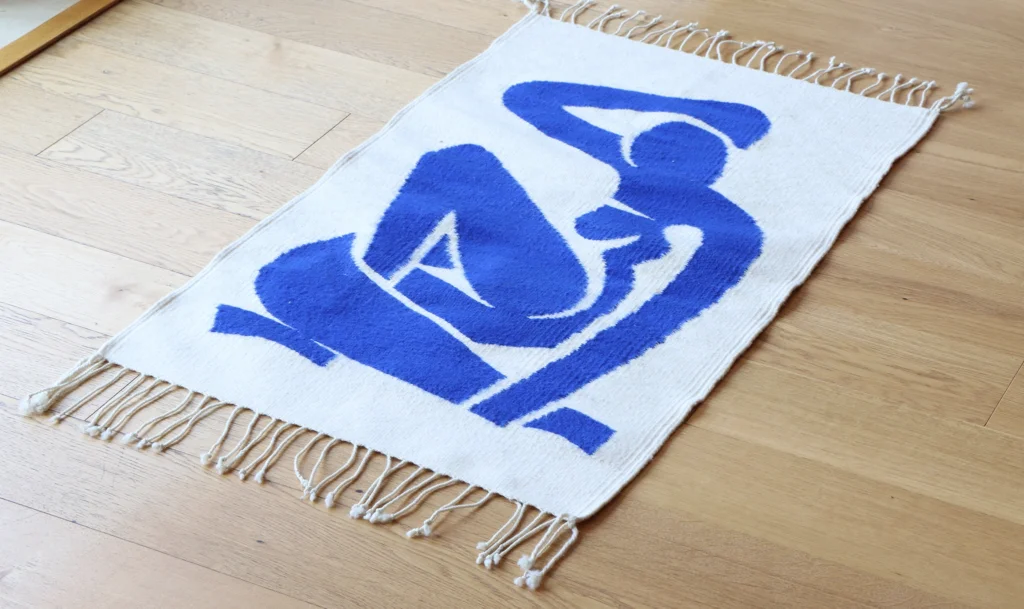
The tapestry designs can reproduce everything from pre-Hispanic codices and works by regional artists to emblematic pieces of universal art, such as Henri Matisse’s Blue Nudes or Vincent van Gogh’s Starry Night. In addition, many artisans create original designs that further enrich this tradition.
Conclusion: A Textile Legacy for the World
Oaxacan rugs are works of art that transmit the history, culture and creativity of the Zapotec people.
In DeCorazon Mexico you can find rugs made with the highest quality, ideal for decorating your home, office or any space with a traditional touch. We invite you to explore our “Tapetes” section within the catalog, where you will discover a variety of authentic pieces. If you have any questions or need advice, do not hesitate to contact us, we will be glad to help you.
References:
Alonso, C. (2024, November 8). Weaving history: a journey through the textiles of Teotitlán del Valle. Travesías Digital. https://www.travesiasdigital.com/destinos/mexico/oaxaca/tejer-la-historia-un-recorrido-por-los-textiles-de-teotitlan-del-valle/
Tuuxmexikoo (n.d.). Mexican loom. Tuuxmexikoo. https://tuuxmexikoo.com/telar-mexicano.html
Visit México (n.d.). Teotitlán del Valle, Oaxaca. Visitmexico.com. https://visitmexico.com/en/destino/2232/teotitlan-del-valle-oaxaca
Oaxaca Mio. (n.d.). Teotitlán del Valle. Oaxaca-mio.com. https://www.oaxaca-mio.com/rutasturisticas/teotitlan.htm