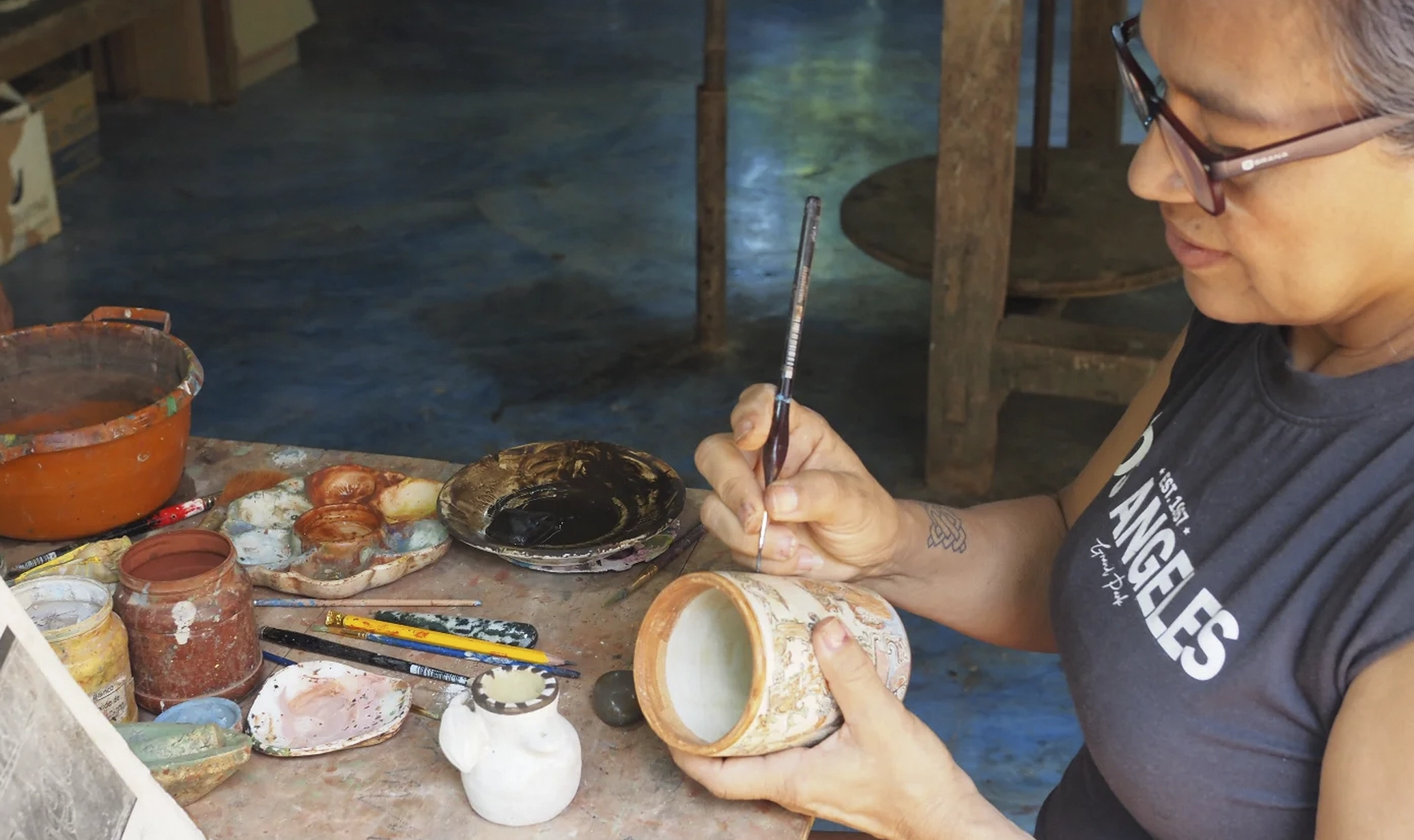
The richness of Mayan culture lives on thanks to the work of artisans who preserve ancestral techniques. A Mayan replica not only captures the splendor of a millennia-old civilization but also pays tribute to Mexico’s cultural heritage and the talent of those who keep this tradition alive. Whether for a collection, a decor project, or as a meaningful gift, these works bring the Mayan legacy into contemporary spaces.
In this article, we’ll explore the cultural legacy of these pieces, the work of the artisans, and the items we have available at DeCorazón México.
Table of Contents
What is a Mayan replica?
A Mayan replica is a recreation inspired by or faithfully based on archaeological remains of the ancient Mayan civilization, carefully crafted by contemporary artisans.
Muna, a town located in the state of Yucatán, is known for its tradition of family-run workshops, where knowledge and techniques are passed down from generation to generation. In these workshops, every family member participates in some stage of the process, making each piece the result of a true collective effort.
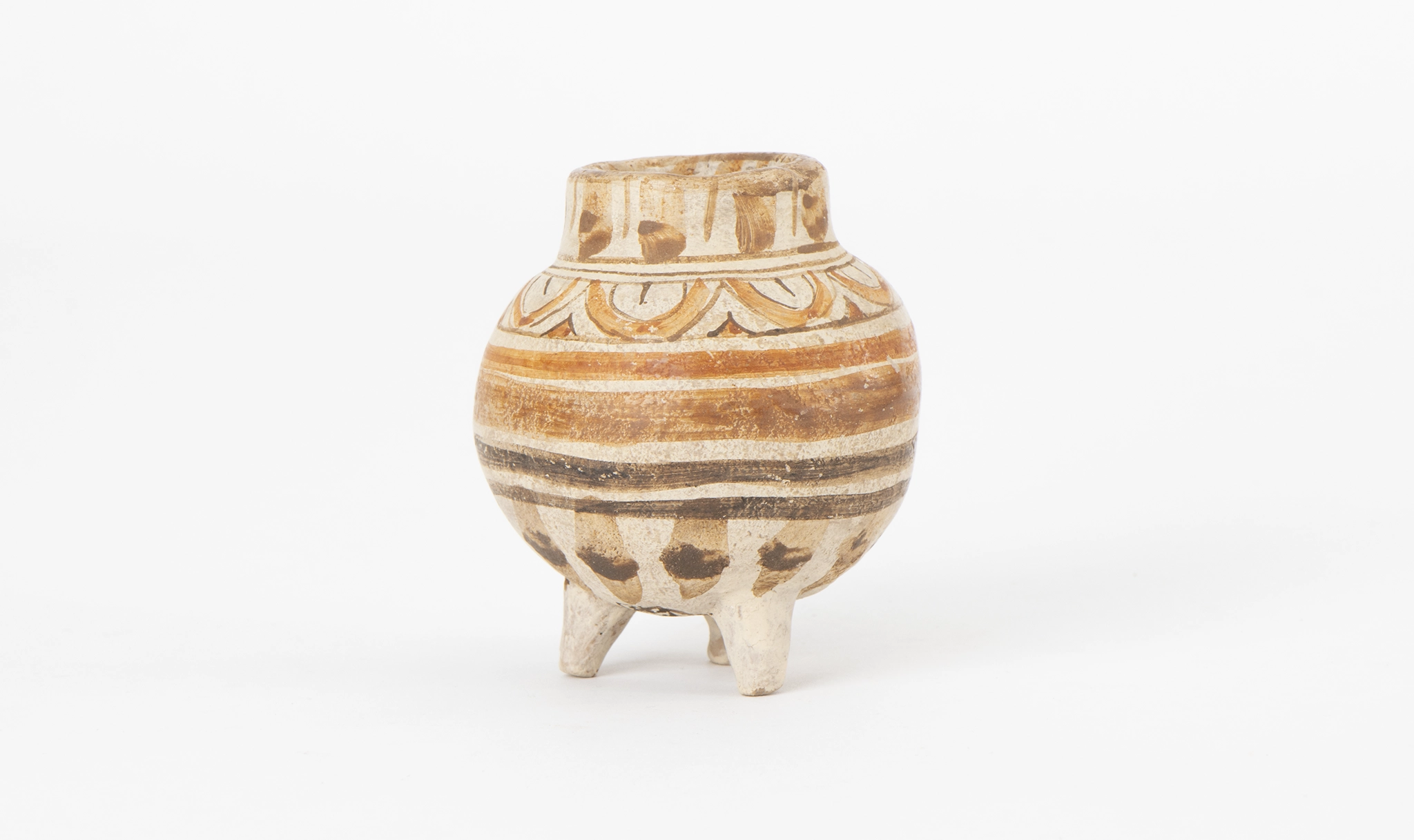
Far from being imitations, these pieces faithfully reproduce the forms, proportions, and iconographic elements found in original sculptures, reliefs, ceramics, and monuments. They are crafted using traditional techniques passed down from generation to generation, employing clay extracted from local mines and natural pigments to faithfully recreate the appearance and spirit of Mayan art.
Each piece requires historical research and a deep understanding of art to faithfully reproduce details that reflect the splendor of cities such as Chichén Itzá, Uxmal, Kabah, and Ek Balam. When you purchase a replica, you are also acquiring a piece that preserves part of the historical memory of Mayan culture.
The Deep Symbolism of Handcrafted Mayan Artifacts
Mayan art was never intended solely for decorative purposes. Every sculpture, relief, or vessel conveyed knowledge about astronomy, religion, politics, and the organization of the universe.
For this reason, contemporary Mayan artworks retain enormous symbolic value that continues to inspire admiration among collectors and art lovers.
When observing a Mayan replica, one can find glyphs, human figures, sacred animals, and geometric elements that represent agricultural cycles, creation myths, or astronomical phenomena carefully recorded by the ancient Maya.
These details make each piece much more than just a decorative object; it is a visual testament to one of the most advanced cultures on the American continent.
Mayan iconography as inspiration for handcrafted replicas
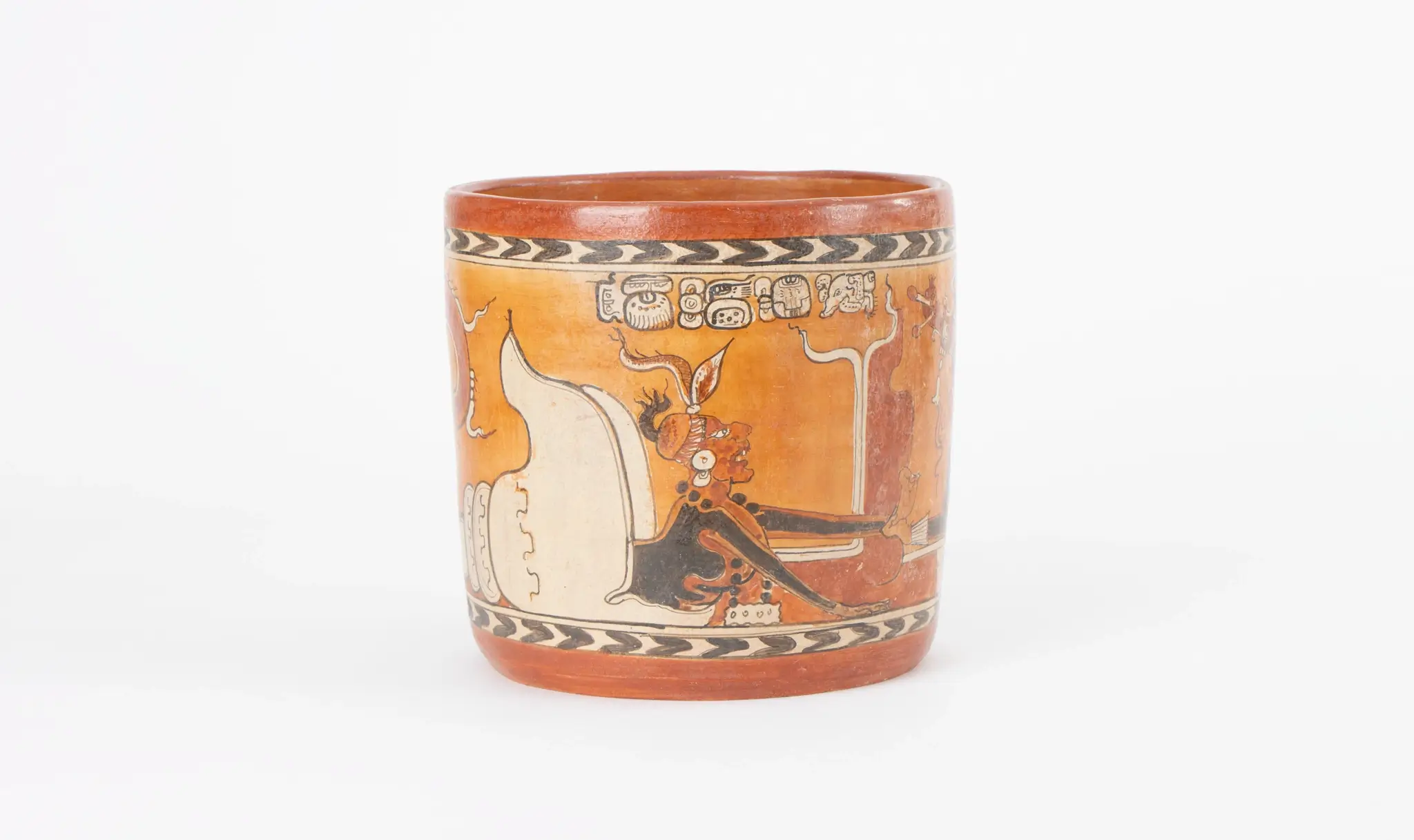
Among the most interesting examples of Maya art are the polychrome vessels from the Classic period, especially those in the Chamá style, which originated in the highlands of Guatemala. Their complex ceremonial scenes, depictions of noble figures, and representations of various Mayan deities have served as inspiration for numerous archaeological replicas crafted by contemporary artisans, who seek to preserve the iconographic richness of this ancient civilization.
At DeCorazón México, you can find replicas of this style, crafted by artisan Patricia Martín:
Vasija Chamá:
Mayan replica of a cylindrical vessel from the Chamá Valley. Polychrome art in reddish and cream tones on ceramic.
Likewise, other deities continue to appear frequently in Mexican Maya crafts, including Kukulkán, the feathered serpent; Chaac, the god of rain; Itzamná, considered one of the creator gods; and Ix Chel, the goddess of the moon and fertility. These depictions keep alive the spiritual legacy and symbolic richness of the Maya civilization.
From Clay to the Final Piece: The Artisanal Process
The quality of a Yucatecan Mayan replica depends largely on the experience and dedication of the artisans, who have refined their techniques over the years.
The creation of each piece begins with the selection of clays carefully chosen for their quality, durability, and regional origin. The artisans then conduct historical research based on photographs and archaeological references to faithfully reproduce the original details.
Each relief and figure is then hand-sculpted, respecting the forms and proportions of Mayan art. Finally, the piece undergoes the appropriate finishing processes, which may include polishing and the application of natural pigments to achieve an appearance similar to that of pre-Hispanic works.
Patricia Martín: Preserving the Legacy of Mayan Art
Behind many of the Mayan replicas that preserve the legacy of this ancient civilization lies the work of Patricia Martín, a master artisan originally from Muna, Yucatán. With more than three decades of experience, she has dedicated her career to reviving traditional Mayan pottery techniques and keeping the artistic legacy of this culture alive.
Her family workshop is an example of how artisanal knowledge is passed down from generation to generation. Patricia leads the creative process, selecting the pieces to be crafted and handling the calligraphy and painting for each one, ensuring that every design preserves the iconographic richness and symbolism characteristic of Mayan art.
The quality and authenticity of her work led her to become the first artisan from the Americas to exhibit at the Nimagine Salon des Créateurs in France, one of the country’s most important contemporary art and craft events. At this exhibition, she presented more than fifty pieces inspired by the Mayan world, bringing Yucatán’s artisanal talent to the international stage.
At DeCorazón México, we are proud to collaborate with Patricia Martín to bring these extraordinary creations to those seeking pieces that reflect the historical, artistic, and cultural richness of the Mayan legacy. Each piece represents a commitment to preserving ancestral techniques and sharing them with new generations. A selection of Patricia Martín’s works is currently on display in our gallery.
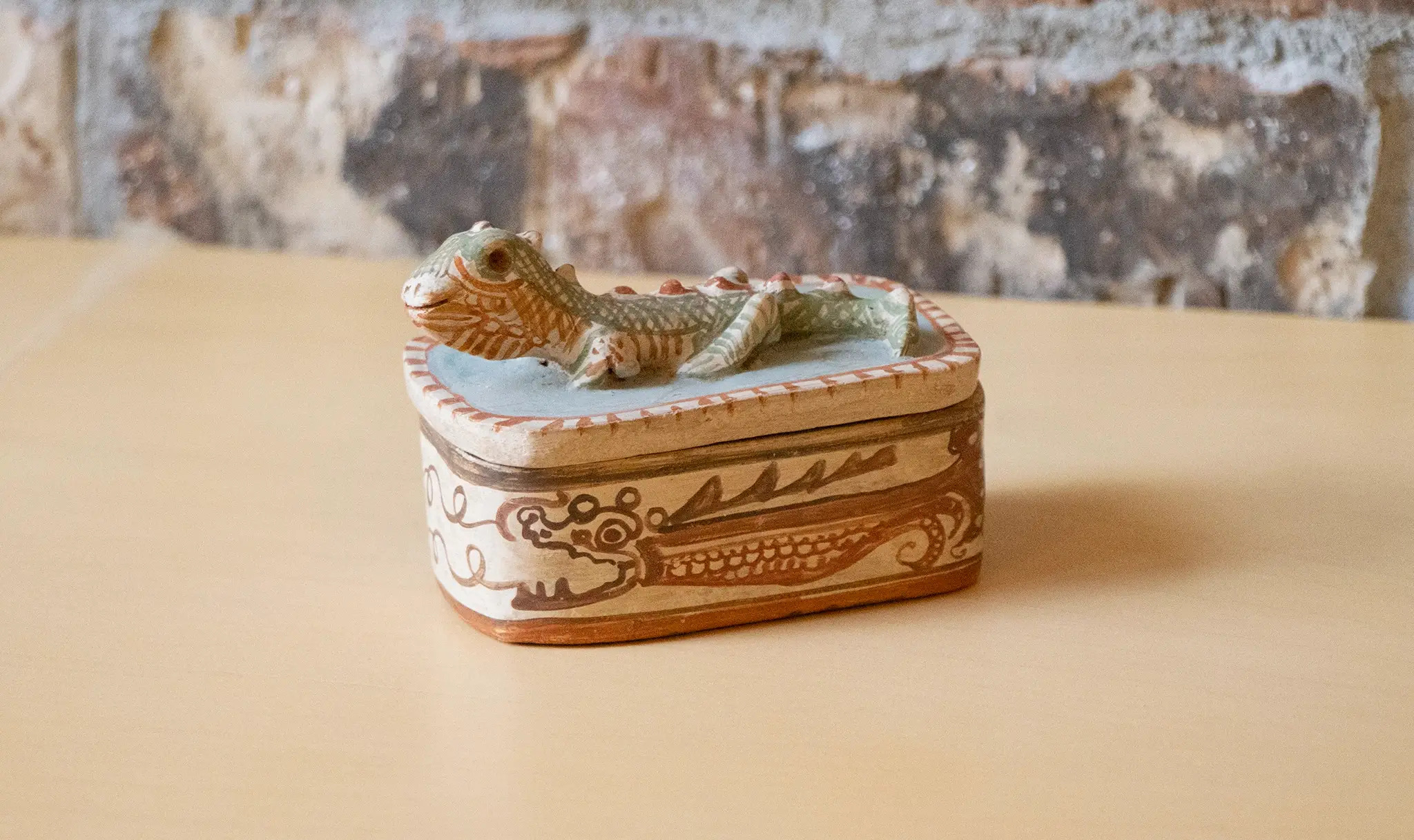
Iguana jewelry box
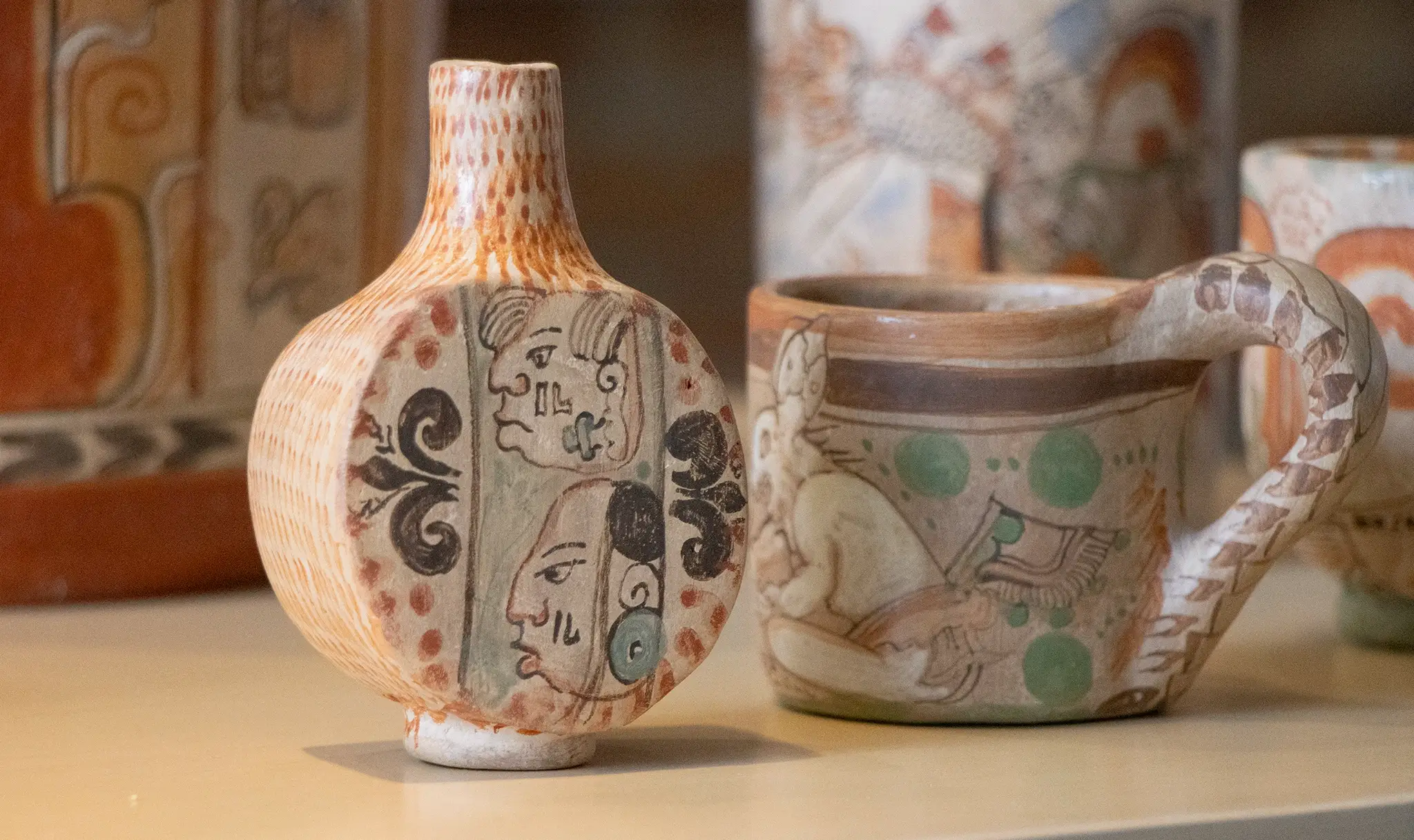
Bottle glyph
Bom maya
Conclusion
A Mayan replica is much more than just a decorative piece. It is the result of the knowledge, creativity, and dedication of artisans who keep one of Mexico’s most important cultural legacies alive.
By incorporating these works into a collection or a decorative space, we also help preserve traditional techniques and celebrate the artistic heritage that has been passed down through generations.
References
Contreras, J. M. (October 25, 2022). The first artisan in the Americas to exhibit at Nimagine in France is from Yucatán. La Jornada Maya. https://www.lajornadamaya.mx/yucatan/205303/primera-artesana-del-continente-en-exponer-en-el-nimagine-de-francia-es-yucateca
MXC. (November 1, 2022). A Yucatan artisan will take her art, inspired by the Mayan world, to France. https://mxc.com.mx/2022/11/01/artesana-yucateca-llevara-su-arte-inspirado-en-el-mundo-maya-a-francia/
Noh Estrada, Á. (2025, August 20). Mayan replicas from Muna are on display in international museums. Diario de Yucatán. https://www.yucatan.com.mx/merida/2025/08/20/replicas-mayas-de-muna-estan-en-los-museos-internacionales.html
Sol Yucatán. (November 23, 2025). Raymundo Martín Brings His Mayan Art to the Olimpo Cultural Center. https://solyucatan.mx/raymundo-martin-lleva-su-arte-maya-al-centro-cultural-olimpo/
Yucatán. (January 10, 2026). Recreates ancient Mayan pottery. https://www.yucatan.com.mx/imagen/2026/01/10/recrea-ceramica-ancestral-maya.html¿