Table of Contents
Introduction to Huancito’s Polished Clay
The polished pottery from Huancito, Michoacán, is one of the most representative examples of traditional pottery in this region. Its glossy surfaces, elegant shapes, and designs inspired by the natural environment make each piece a testament to the knowledge and creativity of Michoacán’s artisans.
In this article, we’ll explore the origins of Huancito’s polished clay, the artisanal process behind each piece, the inspiration behind its designs, and some ideas for incorporating these pitchers and vases into different interior design settings.
What is the polished clay from Huancito, Michoacán?
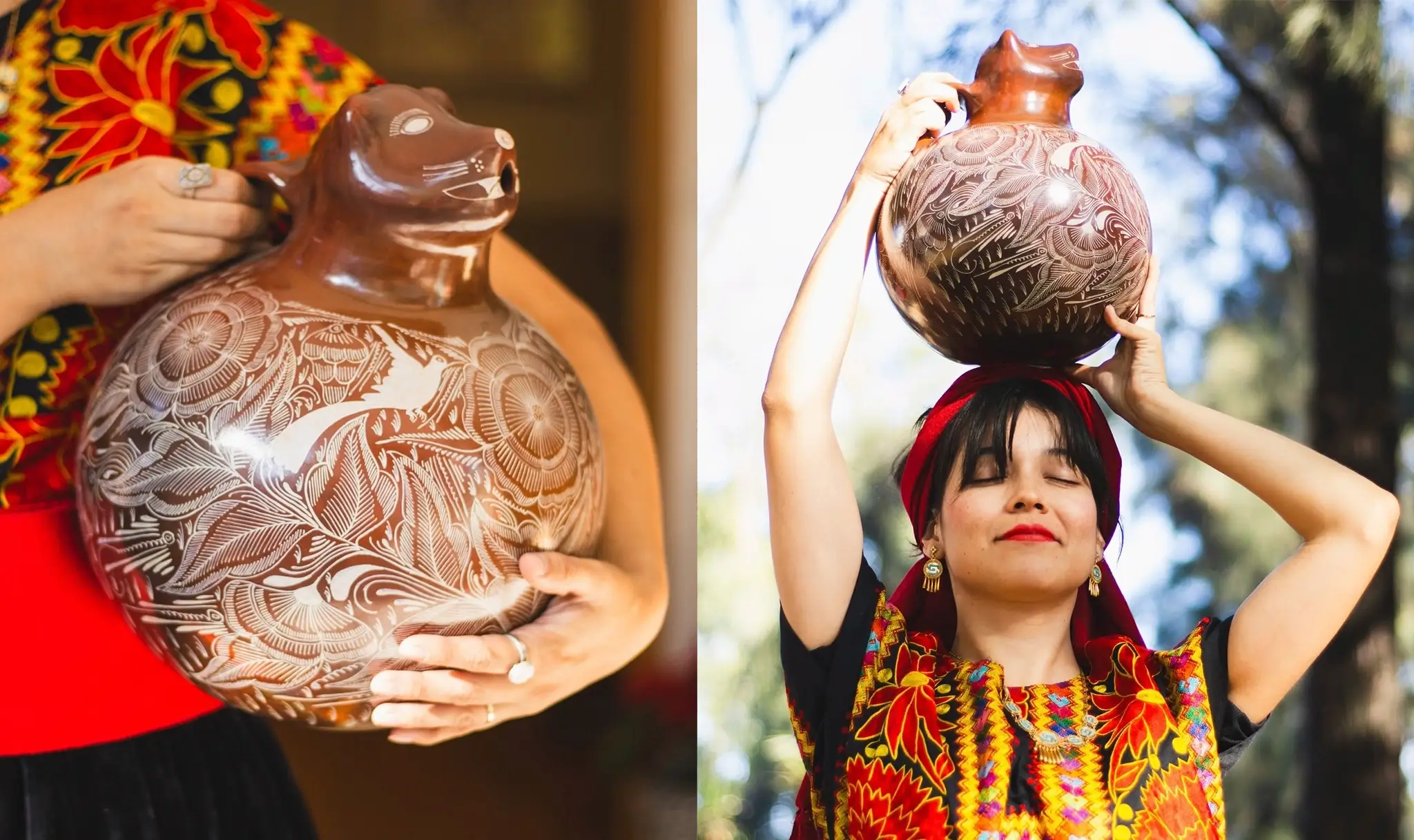
Polished clay is a pottery technique in which the surface of a clay piece is carefully rubbed before firing to achieve a smooth, glossy finish. Unlike glazed pieces, its distinctive appearance is achieved primarily through manual work on the surface of the clay.
The result is a piece with a simple, natural look, in which the shapes, designs, and subtle variations inherent in handcrafted work are part of its character.
Huancito: A Community with a Pottery Tradition
Huancito is a community located in Michoacán, within the region known as the Cañada de los Once Pueblos, an area closely tied to the Purépecha culture.
In this community, pottery is part of a tradition that has been passed down through generations. The knowledge of how to prepare the clay, shape the pieces, polish them, and decorate them is preserved primarily within family workshops.
For the artisans of Huancito, working with clay means much more than just a source of income. It is also a way to keep alive a tradition that is part of the community’s identity and that allows new generations to continue learning the craft.
The Artisanal Process of Polished Clay
The process of making polished clay begins with the preparation of the raw material. The clay must be cleaned, prepared, and kneaded until it reaches a consistency suitable for working. The artisans then shape the jugs, pitchers, and vases, paying close attention to the proportions and details of each piece.
Once the surface has the desired shape, one of the most important steps begins: polishing. Using a smooth stone, the artisan carefully rubs the surface of the clay until achieving the finish characteristic of this technique. This process requires patience and a delicate touch to avoid damaging the piece.
Next, decorative details such as hand-painting are added, and finally, the piece undergoes the firing process. The result is a work in which each stage leaves its mark and which retains small variations that reveal its handcrafted nature.
Designs and Inspiration in Huancito’s Handicrafts
The designs we find are an essential part of these pieces’ identity. Artisans draw inspiration from elements in their surroundings and from motifs that have been part of the region’s decorative tradition.
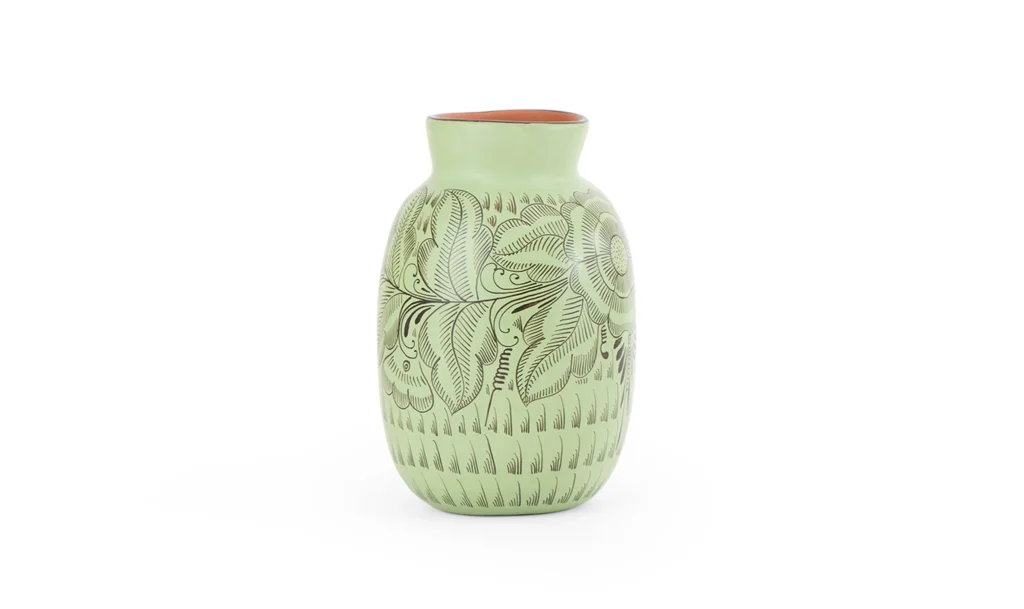
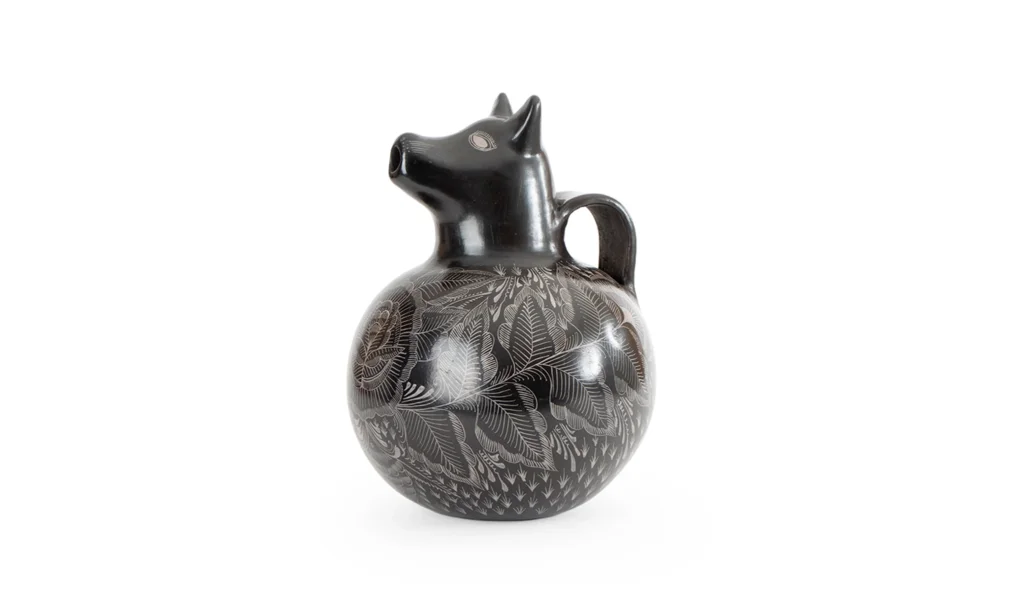
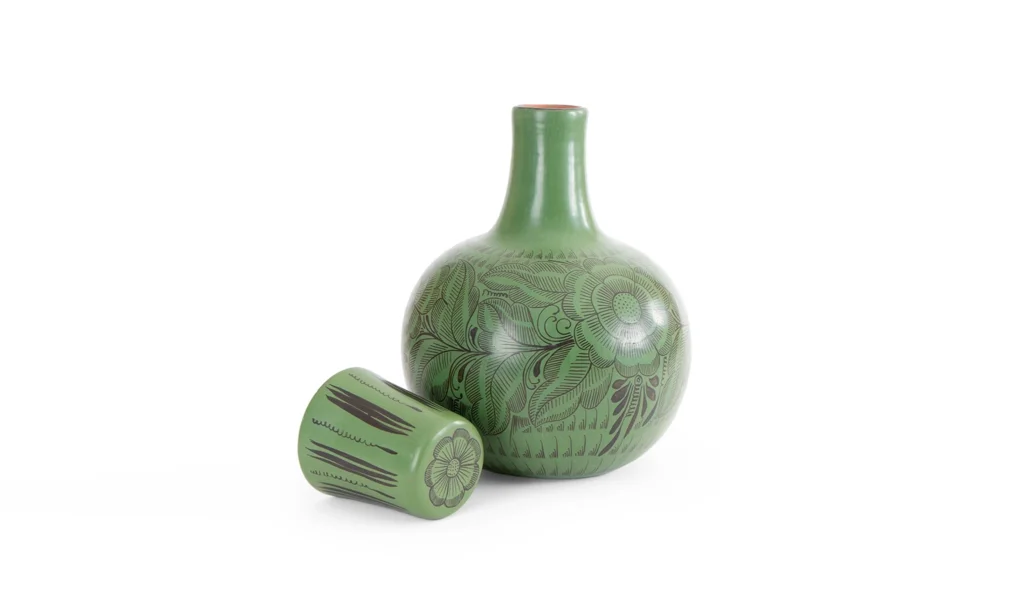
You can find depictions of animals, vases with flowers, leaves, birds, and other natural elements, as well as geometric compositions that follow the curved shapes of jugs and vases.
The colors and patterns used may vary from workshop to workshop and from piece to piece. This diversity gives each piece its own unique character and allows you to recognize the craftsmanship behind each design.
The combination of the clay’s luster, decorative motifs, and traditional shapes results in pieces that maintain an aesthetic deeply rooted in Mexican craftsmanship, yet can also be easily integrated into contemporary spaces.
How to Incorporate Pitchers and Vases into Mexican Decor
Polished clay jugs and vases can take center stage in a variety of spaces. Their texture, natural hues, and glossy finish add warmth and a handcrafted touch that works especially well in interiors where the goal is to incorporate materials and pieces with a sense of history.
A medium-sized vase can be used as a centerpiece or placed on a shelf, accompanied by other decorative items. In larger spaces, larger vases can be placed directly on the floor to create a focal point next to an armchair, a side table, or a wall.
They can also be incorporated into bookcases, where their designs and finishes contrast with other materials such as wood, glass, or metal.
The space doesn’t have to be entirely Mexican in style to incorporate these pieces. Polished clay can complement rustic, contemporary, minimalist, or even mid-century-inspired styles, adding a touch of texture and tradition without overwhelming the decor.
Conclusion
The polished pottery from Huancito, Michoacán, is a testament to Mexico’s rich artisanal heritage. Behind the luster of each pitcher or vase lies a process that requires knowledge, patience, and skill, as well as a tradition that continues to be passed down within the community’s artisan families.
Their shapes and designs allow these pieces to serve not only as decorative objects but also as a way to connect with the history and work of Michoacán’s master artisans.
At DeCorazón México, we’re committed to sharing these stories and bringing our customers pieces that represent the diversity of Mexican folk art. We invite you to explore our selection of polished clay and discover how a handcrafted piece can transform a space while telling a story.
References
Casa de México in Spain. (n.d.). Jugs and pitchers from Huancito: Tower of pots. https://www.casademexico.es/jarros-cantaros-de-huancito-torre-de-ollas/