
Table of Contents
Introduction dances of Mexico
Mexico is a country where cultural diversity is expressed in every corner, and traditional dances are a living reflection of this richness. Each region preserves movements, costumes and rituals that tell stories of faith, resistance, satire and historical memory. From the tamborazos rhythms of Sinaloa to the festive leaps of the Chinelos in Morelos, the cattle herding of Oaxaca and the Afro-descendant rituals of the Costa Chica, these dances transmit identity and strengthen community cohesion. In this tour, we will explore four of these emblematic manifestations, learning about their origin, meaning and cultural legacy that keep the heart of Mexico alive.
The Dance of the Jews or Matachines in Sinaloa
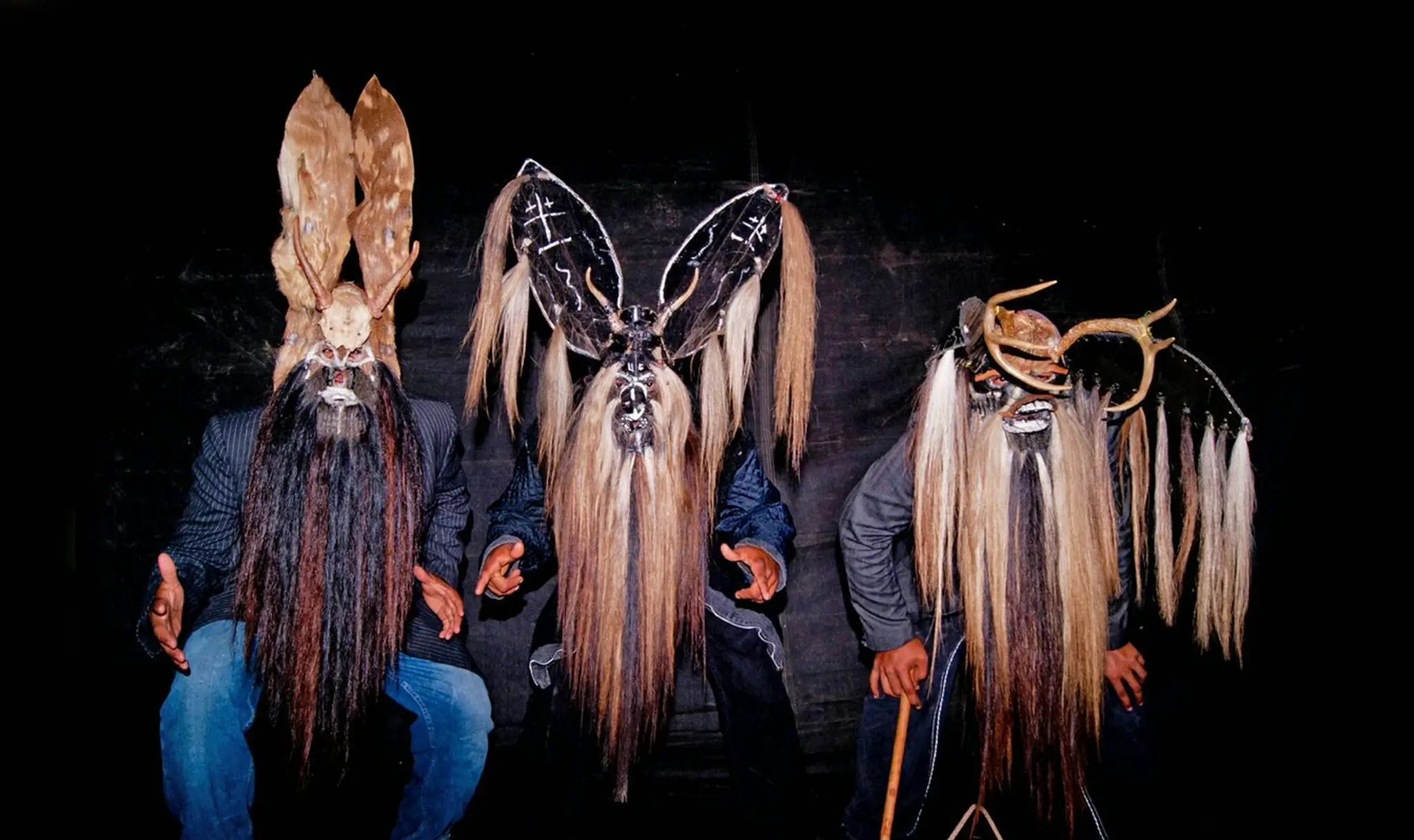
In Sinaloa, during Lent and Holy Week, the streets are filled with the so-called Judíos or Matachines, characters that with dances to the sound of drums, colorful costumes and scary masks go through the towns to entertain, disturb and keep alive a tradition with more than four centuries of history.
This dance, inherited from the Yoremes communities and with pre-Hispanic roots, arose from the fusion of indigenous beliefs and Catholicism introduced by the Spanish. The dancers wear masks carved in wood or leather -never plastic-, representing demonic figures associated with the ancient “Jews” who condemned Christ. Their attire is complemented with tenábaris.[1] and coyoles[2]2], which produce a rhythmic sound to the beat of the drum made of deer skin.
Many men assume this role as a fulfillment of a manda, a promise that they must keep for three years. Finally, on Saturday of Glory, the mask is burned to symbolize the closing of the cycle and to leave behind the sins represented.
The Dance of the Blondes of Santiago Juxtlahuaca, Oaxaca
The Danza de los Rubios, also called Danza de los Pachecos, is a tradition of the Mixteca Baja of Oaxaca, particularly in Juxtlahuaca and Tecomaxtlahuaca, which represents the life of the muleteers who drove cattle. Born more than a century ago, it preserves the festive atmosphere of those men who, after their journeys, gathered around a bonfire with aguardiente, jarana and violin to relate their experiences.
The main characters are the Caporal, the Rubio, the Alvarado, the Pachequito, María Lencha and the Torito, the latter symbolized with a triangular frame covered in cowhide and bovine horns. The music that accompanies the dance includes sounds such as the “caballito” and the “torito”.
The clothing refers to the world of livestock: leather chivarras (a kind of leather jacket)[3]3], spurs, wide-brimmed hats, masks, deer capulin[4]4], whip and masks made by local artisans representing the hacienda hierarchy. The Caporal, a figure of authority, uses a horn to set the rhythm, maintain order and summon the dancers, as was done in the royal cattle drives. This dance is kept alive as a cultural heritage that mixes music, theater and memory of farm work.
The Chinelos of Morelos: satire and fiesta
The chinelos dance originated in colonial times and emerged as a form of mockery and parody of the Spaniards during the Carnival festivities, allowing the indigenous people to express nonconformity, creativity and humor. The term “chinelos” comes from the Nahuatl zineloquie, which means “disguised”.
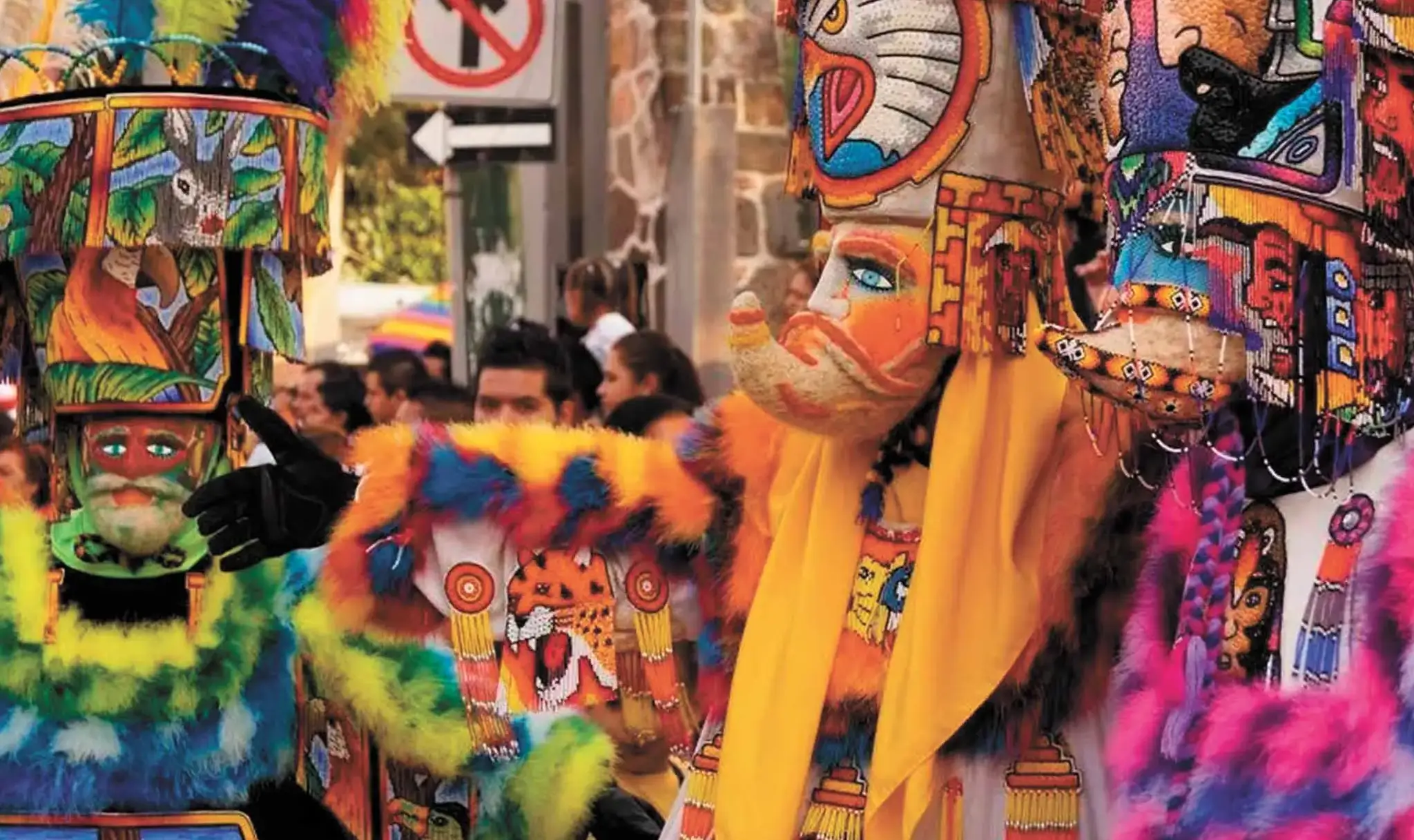
The dancers wear spectacular and colorful costumes, composed of long velvet tunics -according to some authors, a mockery of the priests’ tunics or the Spanish sleeping attire-, adorned with embroidery, sequins and other shiny details, as well as tall hats decorated with feathers and flowers. The masks, with exaggerated European features, prominent beards and mustaches, are the most iconic element, representing the satire towards the conquistadors.
The dance is characterized by leaping movements and agile steps, always synchronized with band music, and constitutes an act of cultural resistance and affirmation of identity. During Carnival, especially in towns like Tepoztlán, the chinelos are the protagonists of parades and celebrations with music, dance and community participation. In addition, chinelo troupes have been incorporated in areas such as Xochimilco and Tláhuac, in Mexico City. The chinelos not only entertain, but also symbolize the history, identity and creativity of the community, keeping alive this tradition that adapts to modern times without losing its historical essence.
The Dance of the Devils of the Costa Chica of Guerrero and Oaxaca
The Danza de los Diablos is originally from the Costa Chica of Guerrero and Oaxaca, practiced mainly during the festivities of the Day of the Dead. Its roots go back to colonial times, when African slaves used this ritual as a form of symbolic resistance and to pay homage to the African god Ruja, seeking liberation from the colonial yoke.
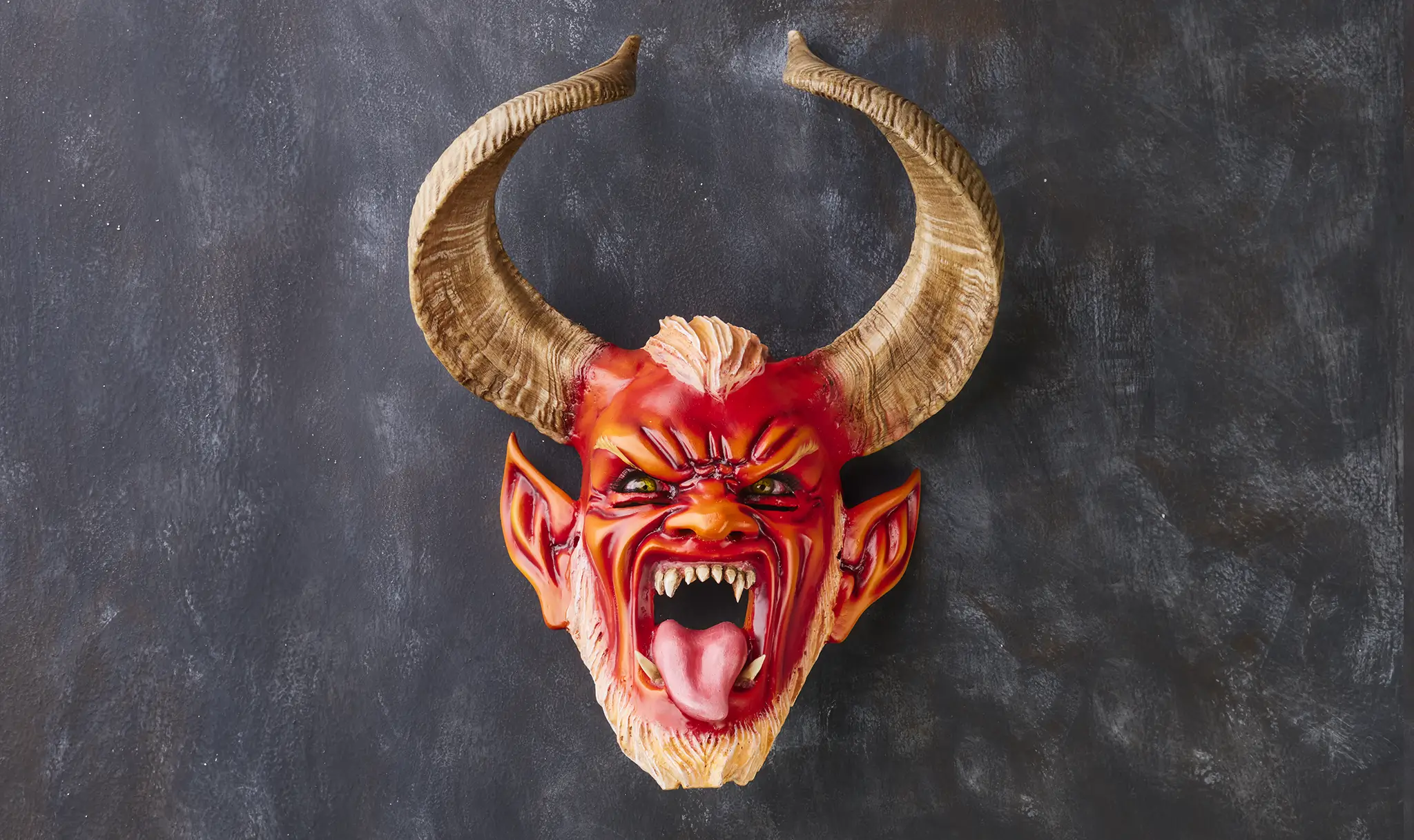
The dancers, known as “diablos” (devils), wear handcrafted masks made from horsehair, deer antlers and skins, and fringed clothing, representing the connection with their African ancestors and nature. The group is led by the Diablo Mayor or Tenango, who sets the rhythm and directs the dance, while the Minga, a man disguised as a woman, provides humor and satire.
The dance is characterized by vigorous stomping, energetic movements and sounds that imitate roars, accompanied by traditional music with instruments such as charrasca, boat, harmonica and violin. This dance not only entertains, but is also an act of identity affirmation and community cohesion, transmitting the Afro-descendant legacy and strengthening the sense of belonging.
In DeCorazon Mexico you can find an authentic devil mask carved in wood and made in Santiago Juxtlahuaca, a unique piece full of history and cultural significance. [Link to the Devil’s Mask]
Conclusion
Mexico’s traditional dances are much more than colorful spectacles; they are narratives that connect past and present, preserve traditions and reflect the diversity of communities and native peoples. Each zapateado, each mask and each costume carries centuries of history, creativity and cultural resistance. To know these dances is to recognize Mexico’s indigenous and Afro-descendant heritage, sometimes forgotten. Let us continue to honor and recognize Mexican culture, ensuring that new generations can enjoy, learn and continue to celebrate this richness through dance and music.
References
Debate Los Mochis. (2018, April 1). Tradición judíos pueblo mayo yoreme Sinaloa Semana Santa. https://www.debate.com.mx/losmochis/tradicion-judios-pueblo-mayo-yoreme-sinaloa-semana-santa-20180401-0150.html
This is Sinaloa. (n.d.). Jews: a Yoreme tradition with more than 400 years in Sinaloa. https://estoessinaloa.com/judios-una-tradicion-yoreme-con-mas-de-400-anos-en-sinaloa/
NVI News (2024, August 4). Doña Gabriela’s capulinas, tradition of the Danza de los Rubios. https://www.nvinoticias.com/oaxaca/general/las-capulinas-de-dona-gabriela-tradicion-de-la-danza-de-los-rubios/164256
National Museum of Anthropology (n.d.). El Torito. https://www.mna.inah.gob.mx/detalle_pieza_mes.php?id=299
National Institute of Anthropology and History (n.d.). Chinelos: a typical dance of Morelos in the INAHFest. https://www.inah.gob.mx/foto-del-dia/chinelos-una-danza-tipica-de-morelos-en-el-inahfest
La Posada del Valle (n.d.). The history of the Chinelos. https://www.laposadadelvalle.com/post/la-historia-de-los-chinelos
CIESAS (n.d.). The dance of the devils: identity and community cohesion. https://ichan.ciesas.edu.mx/la-danza-de-los-diablos-identidad-y-cohesion-comunitaria/
Once Noticias (n.d.). Dance of the devils: Afro-descendant tradition in the coast of Guerrero and Oaxaca. https://oncenoticias.digital/reportajes-especiales/danza-de-los-diablos-tradicion-afrodescendiente-en-la-costa-de-guerrero-y-oaxaca/7460/
Mexico Desconocido (n.d.). Dance of the devils: Afro-descendant legacy in Mexico. https://www.mexicodesconocido.com.mx/danza-de-los-diablos-legado-afrodescendiente-en-mexico.html
[1] Tenabaris, or tenebois, are rows of dried butterfly cocoons filled with pebbles, sewn together with thread. They are placed on the dancers’ calves to produce a sound similar to that of rattles when dancing.
[2] Coyoles are leather belts from which hang reeds or wands, which when they collide with each other emit a rhythmic sound. The dancers wear them around their waists.
[3] Chivarras are chaps made of goat skins tanned with hair.
[4] Capulinas are deerskin jackets.
Dances of Mexico