
Discover the Dönxu dolls, a priceless cultural treasure, and learn about their fascinating origins, the characteristics of their clothing, and the different styles available in our store.
Dönxu Dolls: Meaning, Origin, and Cultural Heritage
Dönxu dolls. These two words encompass much more than a simple toy; they represent an ancestral legacy, the identity of indigenous communities, and one of the purest expressions of Mexican cultural heritage. In this article, we will take an in-depth look at the history, profound symbolism, and social significance of this extraordinary craft. It is recognized in Mexico and in countries such as the United States, Spain, and France, where appreciation for meaningful handicrafts continues to grow.
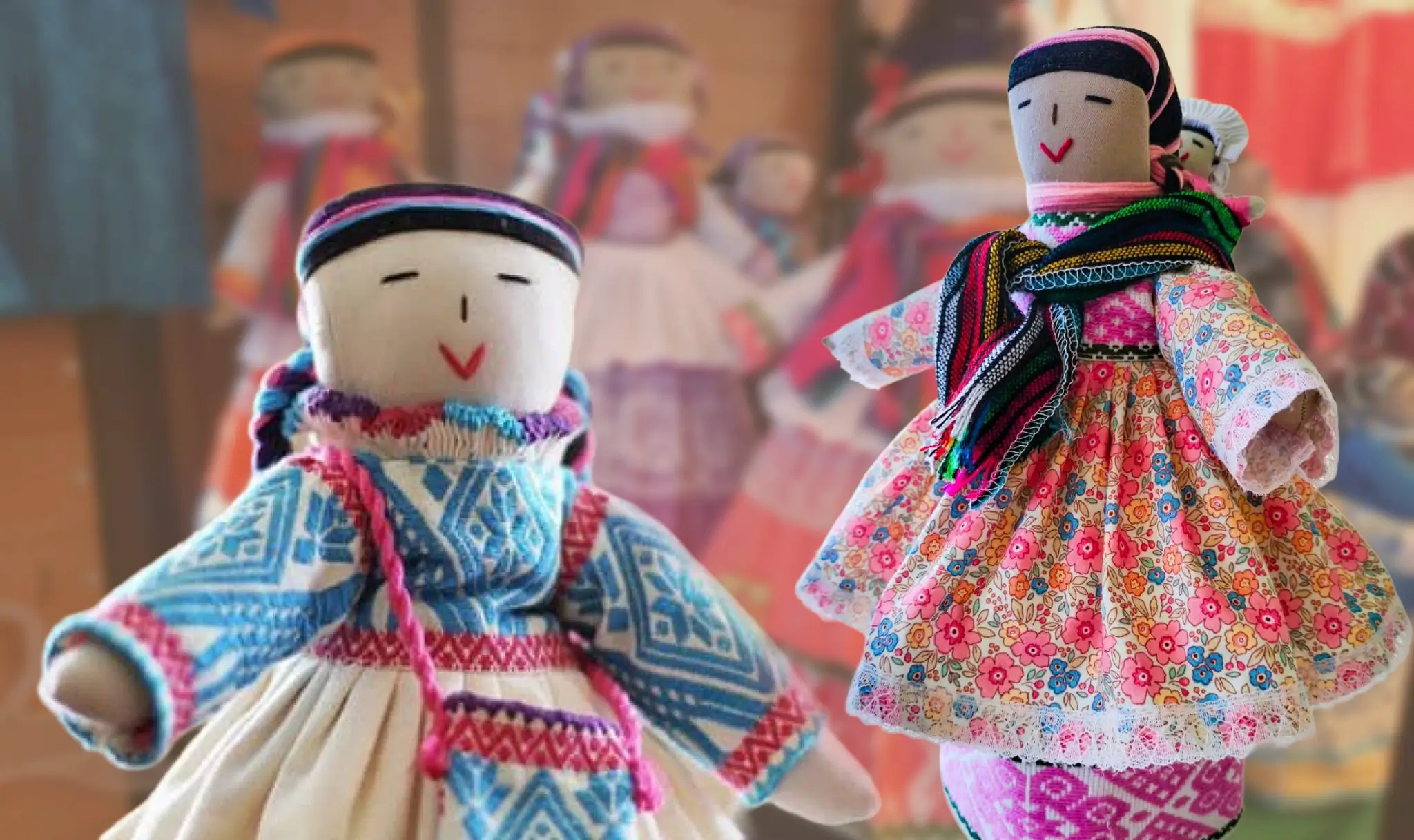
Dönxu dolls are handcrafted fabric figures traditionally made by women of Otomí (Hñähñu) descent, specifically in the community of San Ildefonso Tultepec, in the municipality of Amealco de Bonfil, Querétaro. Their name means “doll” in their native language, and they are characterized by their manta-cloth attire, fine embroidery depicting local flora and fauna, and an elaborate headdress made of braids interwoven with colored ribbons (Hidalgo, 2024).
Table of Contents
Origin and Meaning: The Soul of Dönxu Dolls
To understand the significance of the Dönxu dolls, it is essential to trace their origins. These traditional dolls are crafted by the creative hands of Otomí women in the state of Querétaro, unlike other regional figures, the Dönxu was initially conceived as a teaching tool and a means of passing down customs, language, and traditional clothing from mothers to their daughters, thereby preserving their heritage over time.
During the creative process, each artisan infuses her work with intention, transforming it into authentic, meaningful crafts. No two pieces are exactly alike; creativity flows through the chosen colors and embroidered patterns, making each piece one-of-a-kind.
Social Representation and Cultural Heritage Among Indigenous Peoples
Dönxu dolls go beyond their aesthetic function to become an economic pillar and a symbol of social representation for hundreds of families. In the villages of Querétaro, the crafting of these pieces provides women with economic independence, empowering them within their communities. Furthermore, they have been granted Protected Geographical Indication status by the Mexican Institute of Industrial Property, which recognizes this cultural heritage, enhances its prestige, and ensures the protection of traditional manufacturing methods against plagiarism (Estrella, 2026).
On an international level, these dolls serve as ambassadors of national identity, sharing the history of indigenous peoples with a global audience that deeply values handcrafted work and the story behind every thread.
Characteristics of the Clothing and Its Intricate Craftsmanship
One of the easiest ways to identify authentic Dönxu dolls is by their clothing, which is an exact replica of the traditional attire worn by the women of San Ildefonso Tultepec.
List of the main features of his attire:
- The High-Neck Blouse: Blouses typically feature a distinctive high neckline with long sleeves and are traditionally made from fabrics such as poplin and woolen cloth.
- Traditional Embroidery: The clothing features hand-embroidered designs in the form of stars, flowers, or animals native to the local area.
- The Skirt: They wear full skirts with multiple pleats, paired with a loom-woven waist sash.
- The Hairstyle: The distinctive crisscrossed braids on the head, lavishly adorned with multicolored ribbons, symbolize joy and festivity.
Dönxu Doll Models Available at DeCorazón Mexico
At our store, we take pride in working directly with the artisans to offer authentic pieces while ensuring fair trade. We currently carry a carefully curated selection of Dönxu dolls that suit a variety of tastes and spaces, always respecting traditional techniques. We offer a variety of models ranging from neutral colors like light gray to vibrant pink. Each piece is one-of-a-kind, perfect for adding to your collection of artisanal pieces or as a unique, handmade gift.
FREQUENT QUESTIONS
What is the difference between the Lele doll and the Dönxu dolls?
Although both originate from the municipality of Amealco in Querétaro, the Dönxu dolls are unique to San Ildefonso Tultepec and are distinguished by their high collars and pleated skirts with embroidered trim, whereas the Lele doll originates from Santiago Mexquititlán and has distinct facial features and clothing, such as a wider ribbon headband.
How does my purchase contribute to cultural heritage?
When you purchase Dönxu dolls directly through fair-trade platforms, you support the local economy of the artisans. This encourages new generations to continue learning the craft, thereby preserving cultural heritage.
Conclusion
Dönxu dolls are a living testament to Mexico’s resilience, craftsmanship, and profound cultural richness. By learning about their origins and the effort behind every stitch, we transform our perception, moving beyond viewing them as mere objects to appreciating them as the extraordinary, meaningful works of art they are. Preserving them is the responsibility of all who appreciate art and history.
Are you ready to bring a piece of history and tradition into your home? We invite you to discover our exclusive collection of Dönxu dolls. Support artisanal talent and celebrate the diversity of Mexican cultural heritage by purchasing one of these beautiful pieces today. Visit our online catalog and fall in love with their colors.
References
Discover Querétaro. (June 14, 2023). Crafting the Dönxu Doll, native to San Ildefonso Tultepec. Retrieved from https://youtu.be/lTrUt9AoGHo?si=C0WvCL2hdCSvEzY1
Estrella, V. (February 12, 2026). IMPI Grants Geographical Indication Status to Two Handcrafted Dolls from Querétaro. Retrieved from El Economista: https://www.eleconomista.com.mx/estados/impi-otorga-indicacion-geografica-dos-munecas-artesanales-queretaro-20260212-799636.html
Hidalgo, F. (November 20, 2024). Why Are the Traditional Dolls of Querétaro Called Lele and Dönxu? Retrieved from El Universal. Querétaro: https://www.eluniversalqueretaro.mx/tendencias/por-que-se-llaman-lele-y-donxu-las-munecas-tradicionales-de-queretaro/