Table of Contents
Introduction: The language of the Oaxacan land.
Pottery in Oaxaca is much more than technique, it is a dialogue between the artisan and the material. In the Central Valleys, clay has been the support of the cosmogony of entire peoples, transforming over the centuries from a utilitarian object into one of the most sophisticated expressions of popular art and organic luxury in Mexico.
History and origins: The gray clay of Atzompa in pre-Hispanic times.
Before the distinctive green color that today floods its streets, Santa María Atzompa was a center of gray clay production. During the splendor of the Zapotec culture, the master potters of Atzompa mastered the “reduction firing” technique, a process where oxygen was controlled in the kiln to obtain deep gray and black tones.
At this stage, Atzompa’s gray pottery not only served for daily life, but also manifested itself in highly complex funerary urns and figures of deities. This ancient ability to master fire is the true basis of all the art we admire today.
The evolution to black: The legacy of San Bartolo Coyotepec
While Atzompa evolved after the conquest towards green glazing, the black clay technique reached its greatest refinement in San Bartolo Coyotepec. There, tradition became legend in the mid-twentieth century, when Doña Rosa Real Mateo de Nieto perfected the technique of burnishing with quartz, giving rise to the characteristic glossy finish of black clay that we know today.
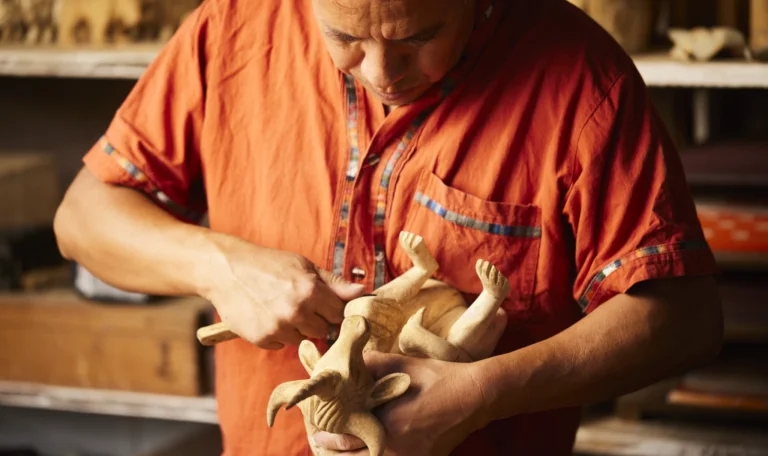
This technique requires an absolute mastery, from the kneading of the virgin clay to the detailed hand fretwork. The result is an obsidian-colored piece with metallic sparkles that needs no artificial glazes to dazzle.
Livelihoods and livelihoods: The heart of family workshops
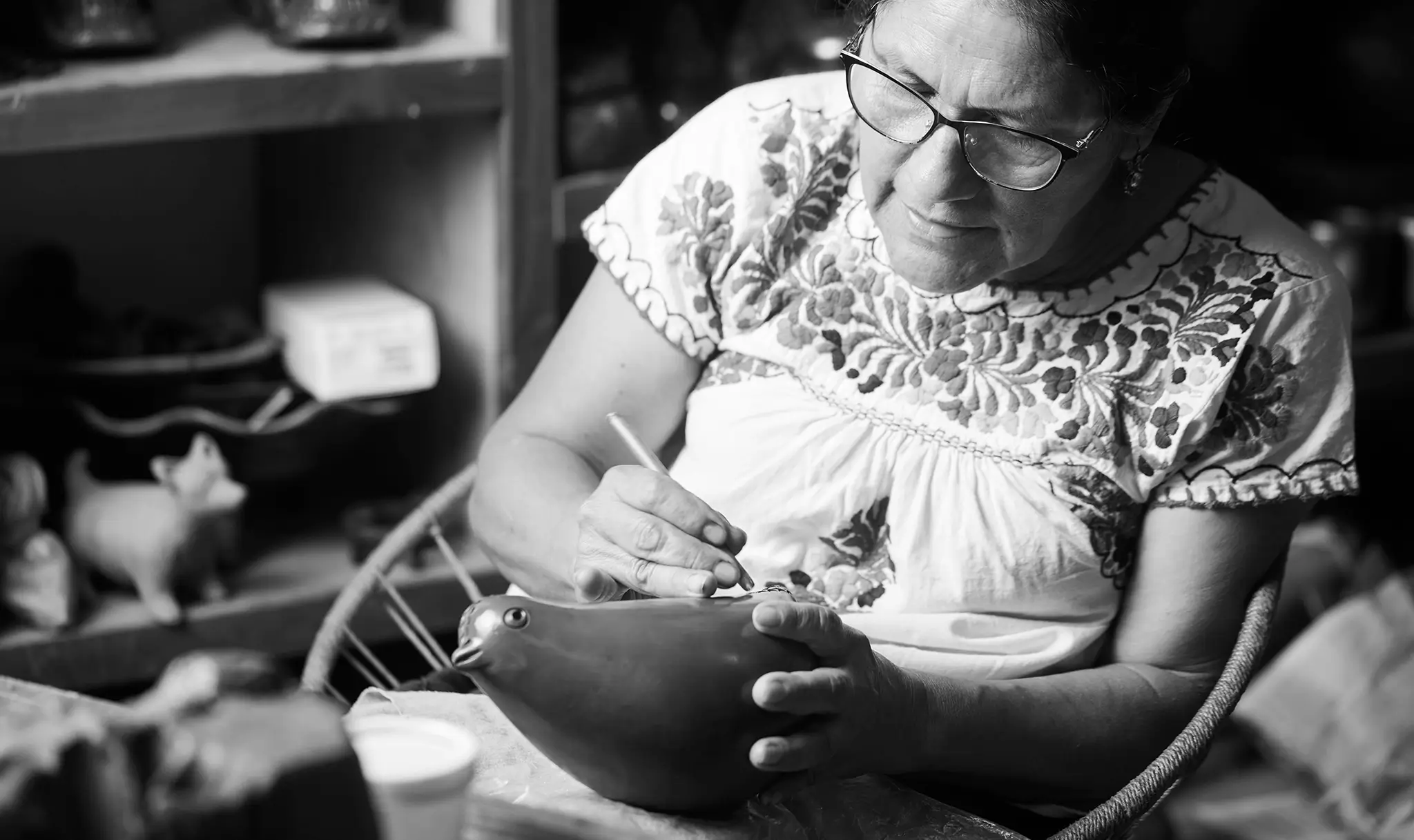
Behind each piece is a structure that sustains entire communities. In Oaxaca, the workshop is the home and the family is the work team. This craft is the main way of life and economic livelihood for thousands of families.
The transmission of knowledge is generational, children grow up feeling the humidity of the clay and learning the secrets of the kiln. This system of inheritance ensures that, with each piece sold, not only an object is acquired, but the stability and future of a living culture is preserved.
From everyday use to luxury art
Historically, clay was born to contain water and food. However, technical mastery has brought these pieces into the spheres of luxury art. Today, a black earthenware vessel or sculpture is judged not only by its utility, but by the precision of its symmetry, the depth of its luster and the complexity of its engraving.
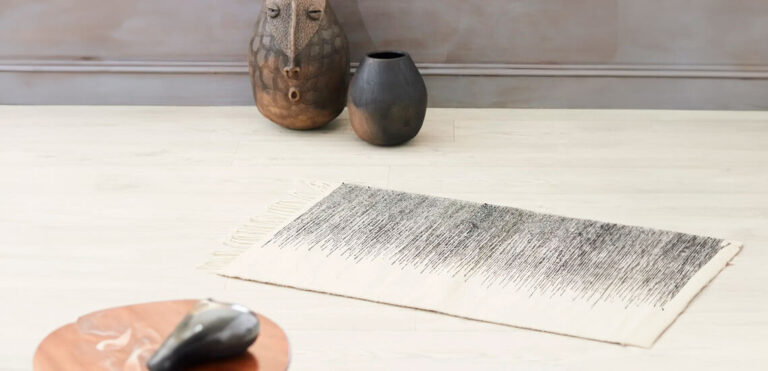
Contemporary interior design has adopted these pieces as high-end elements. Their ability to contrast in minimalist spaces and their unique character place them on the same level as works of art, representing an organic sophistication that industrial luxury will never be able to replicate.
Gallery Selection: Exclusive Pieces
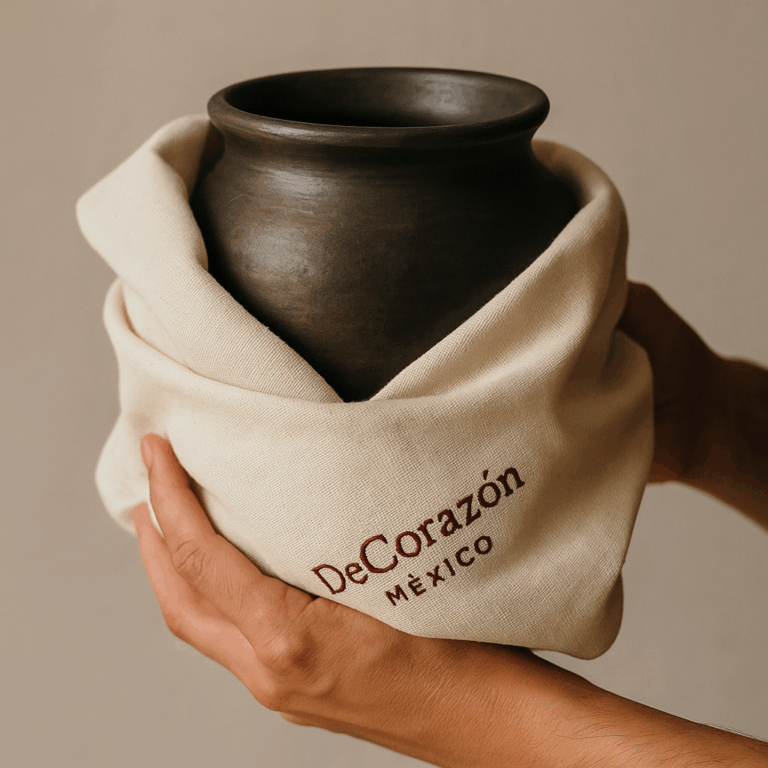
At DeCorazón México, we present a selection of unique pieces that enhance the tradition of black clay, taking it to a level of authentic mastery. Each piece stands out for its high quality details and has been elaborated by master artisans who have dedicated their entire lives to perfecting this technique.
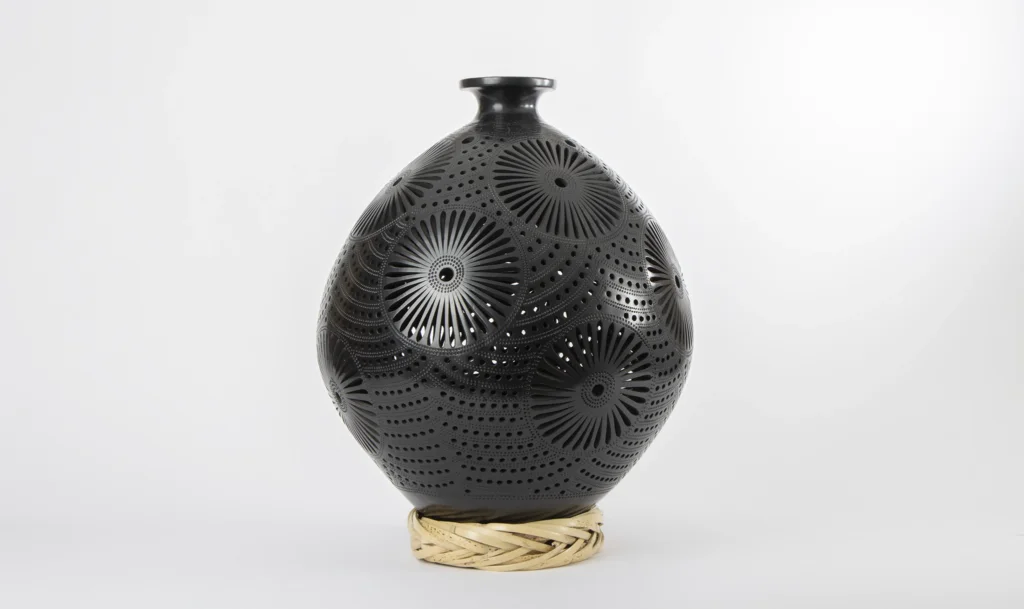
Mezcalero pitcher
Large black clay pitcher with flower-shaped openwork. It includes a palm base that enhances its design and provides stability. A unique handmade piece to decorate any space.
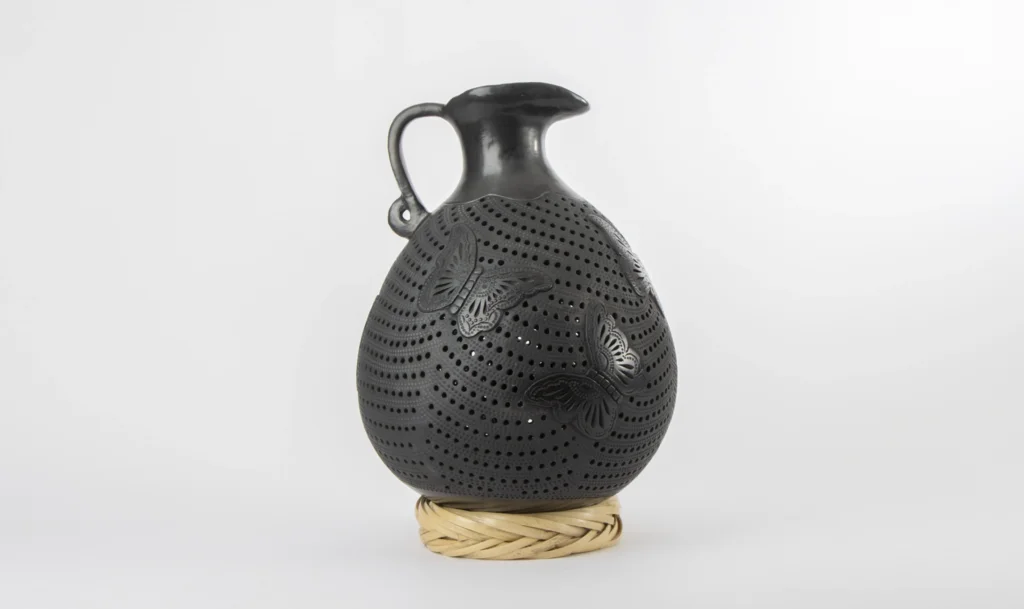
Openwork black earthenware jug
Openwork pitcher of black clay with butterflies in its design. Handmade piece that stands out for its elegance and tradition.
Diablo
Black clay sculpture of a man dressed in the costume of the Los Diablos de Pinotepa dance. Includes natural hair, inspired by the masks used during this celebration.

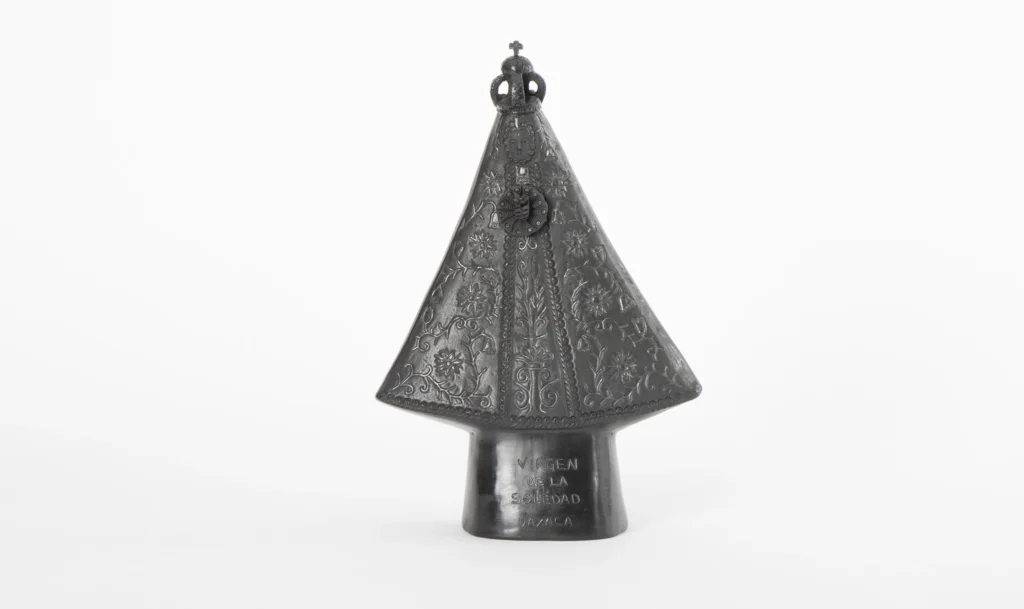
Virgin of Solitude in black clay
Virgin of Solitude in black clay, small format. It presents fine details in the mantle, traditional crown and hands joined in prayer, symbol of faith and meditation.
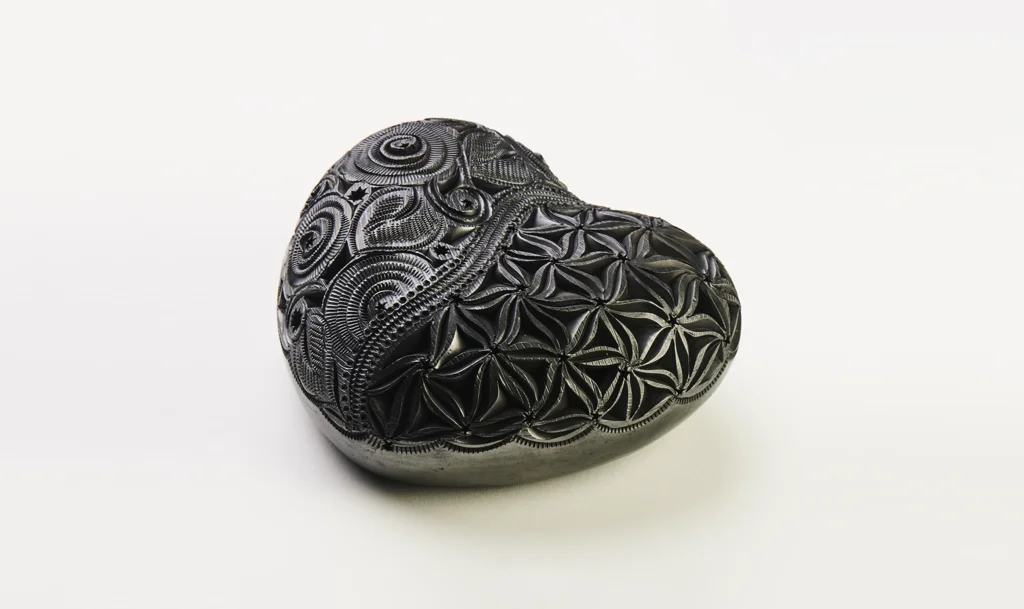
Large openwork black clay heart
Large, openwork heart combined with flowers, leaves, stars and textile designs. Beautiful creations that will bring celebration and tradition to your home.
If you did not find your favorite piece in this selection, you can discover more options in our black clay section of the catalog.
Conclusion
The history of clay in the Central Valleys of Oaxaca is a testimony of resilience and transformation. What began as an ancestral technique of fire management and land control in Atzompa, evolved and perfected to find in the black clay of San Bartolo Coyotepec one of the most sophisticated artistic expressions in Mexico.
Acquiring one of these pieces is not only an aesthetic choice to beautify a space, it is to recognize the value of a manual process that has survived for centuries and today represents the livelihood of entire families. By integrating black clay into contemporary design, we are bringing into our homes a fragment of living history, a direct connection with the earth and the mastery of those who, with their hands, transform dust into eternal art.
Bibliography
Doña Rosa Pottery (n.d.). History. Doña Rosa Pottery. https://alfareriadonarosa.com.mx/historia/
AKA Mexico (n.d.). Black mud Oaxaca. AKA Mexico. https://akamexico.com/barro_negro_oaxaca/