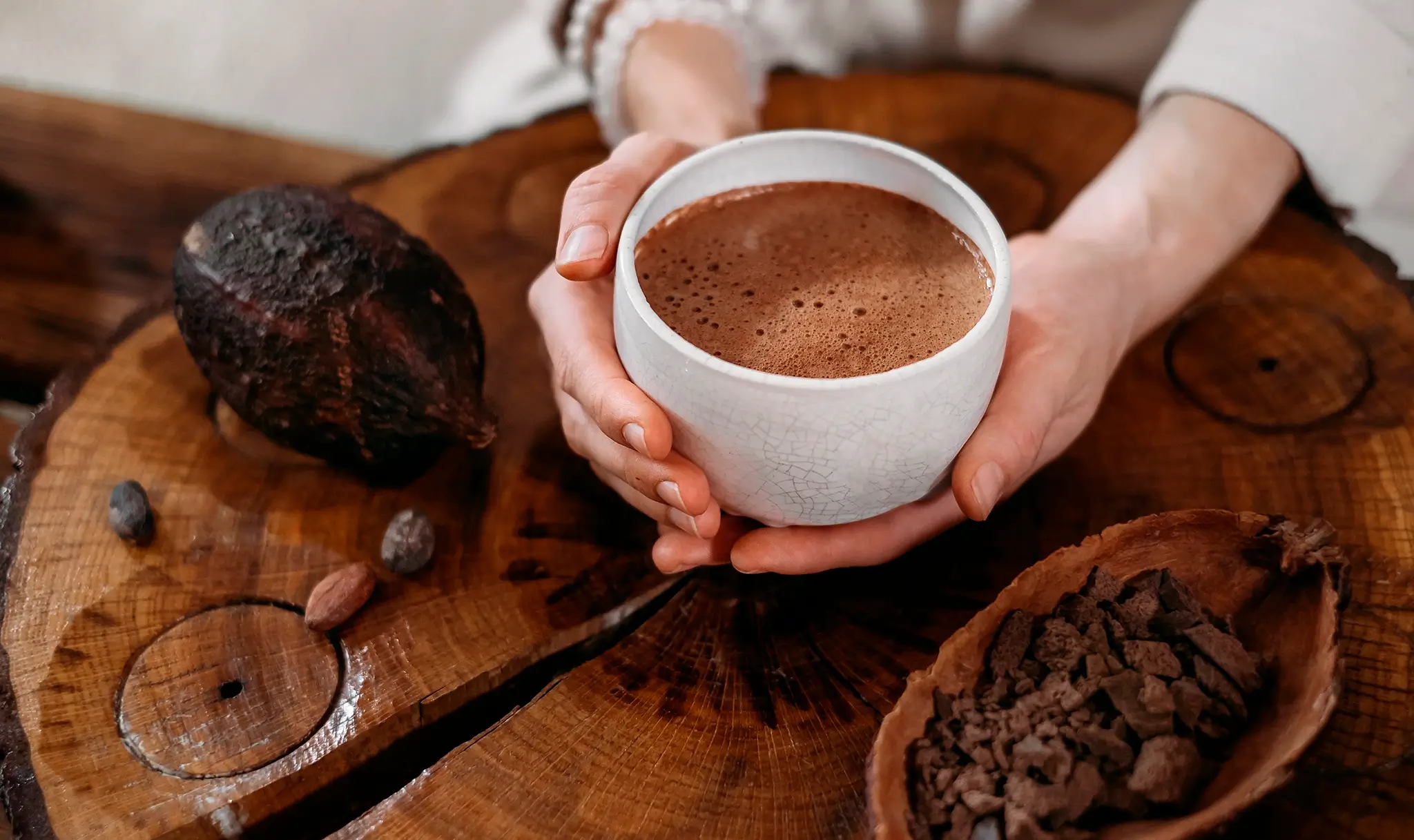
Discover the rich history of chocolate in Mayan culture, the sacred symbolism of cacao, its legacy in Yucatán, and our fine craftsmanship.
Chocolate in Mayan Culture: Legacy, Symbolism, and Craftsmanship
Table of Contents
Introduction to Sacred Cacao in Mesoamerica
Understanding chocolate in Mayan culture is like embarking on a fascinating journey through time to the heart of one of Mesoamerica’s most advanced and mystical civilizations. For passionate history buffs and lovers of meaningful crafts, cacao transcends modern gastronomy; it is a profound symbol of identity, spirituality, and devotion. In this article, we’ll explore the religious significance of this ancient seed, its fundamental role in society, and how its invaluable legacy endures to this day through art and tradition.
Chocolate in Mayan Culture: The Food of the Gods
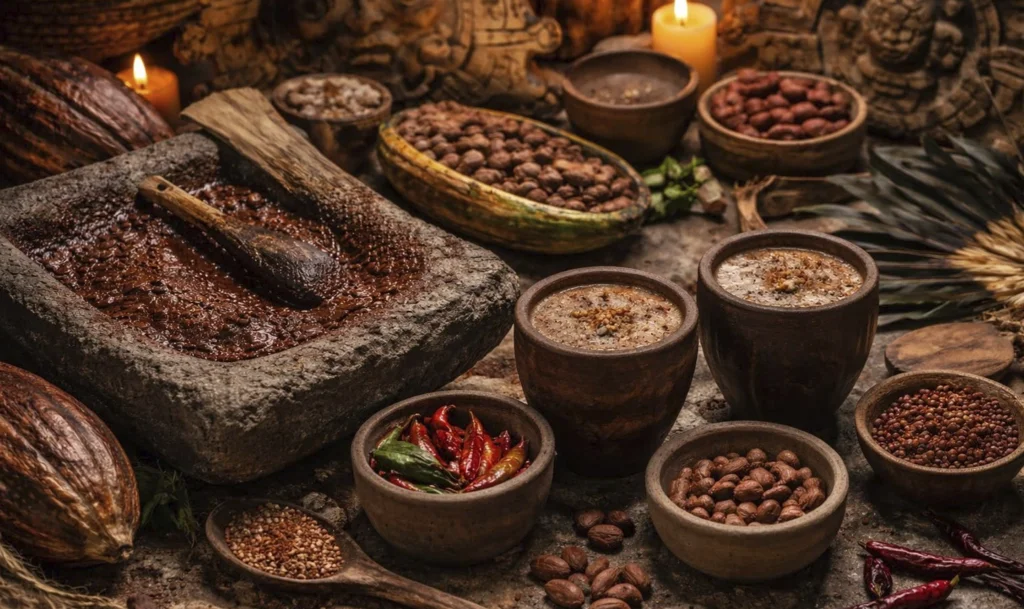
In the rich pre-Hispanic worldview, the cacao tree (Theobroma cacao) enjoyed divine status, as these ancient peoples believed it had a direct connection to the underworld because it required shade to grow, making chocolate a sacred beverage used in ceremonial rituals. Furthermore, in Mayan culture, chocolate was not consumed as the sugary treat we know today; rather, it was a frothy beverage made with chili peppers, corn, vanilla, and local spices (García, 2025).
Ancient codices and the intricate stone reliefs carved into the pyramids clearly show that knowledge of the cultivation and preparation of cacao was a direct gift from key deities, such as the feathered serpent, Kukulkán. This divine beverage was strictly reserved for the highest echelons of society—royalty, elite warriors, and high priests—representing a social status unattainable to the common people. To explore the topic of pre-Hispanic deities in various Mesoamerican civilizations in greater depth, you can consult detailed historical information at https://e1.portalacademico.cch.unam.mx/alumno/historiademexico1/unidad2/mesoamerica/diosesycultoreligioso
The Symbolism of Cacao in Religious and Social Rituals
The ceremonial presence of chocolate in Mayan culture was absolutely indispensable during the most important events of the life cycle. It was used with great reverence in marriage rituals, where the bride and groom carefully exchanged cacao beans and shared a gourd of the frothy drink as an unbreakable symbol of commitment, fertility, and future prosperity.
In addition, the priests believed that the drink’s thick foam was an important factor in determining whether it was good chocolate. To achieve this perfect texture, they poured the dark liquid from a considerable height into clay vessels, an act that required great skill (Olguín Lacunza & Rojas García, *Cacao: From the Maya to the World*, 2022). In this context, cacao represented the essence of sacrifice, the life force, and the renewal of the earth.
Cultural Heritage in Yucatán: Living Ancestral Techniques
Fortunately, the Mayan culture’s ancestral knowledge of chocolate did not disappear after the Conquest. Today, in various rural communities and small towns throughout the state of Yucatán, the ancient artisanal techniques for making this historic beverage are still proudly preserved.
The skilled women of these communities continue to patiently roast the cacao beans over a wood fire in clay comales, grind them by hand on heavy volcanic stone metates, and mix them with local spices, achiote, chili peppers, and pure water. This meticulous, respectful, and labor-intensive process not only preserves the seed’s complex original flavor intact but also keeps alive the flame of the region’s cultural identity. If you’d like to learn more about how we support these traditions, visit our blog post on Artisan Day in Mexico: Honoring the Masters of Folk Art https://decorazonmexico.com/dia-del-artesano-en-mexico-honor-a-los-maestros-del-arte-popular/.
Craftsmanship and Tradition: Our Mayan-Style Ceramic Mugs
To properly honor the millennia-old tradition of chocolate in Mayan culture, at DeCorazón México we want to share unique pieces that capture the true essence of this drink of the gods. Lovers of artisanal crafts know that savoring authentic cacao requires a vessel that lives up to its majestic history and symbolism.
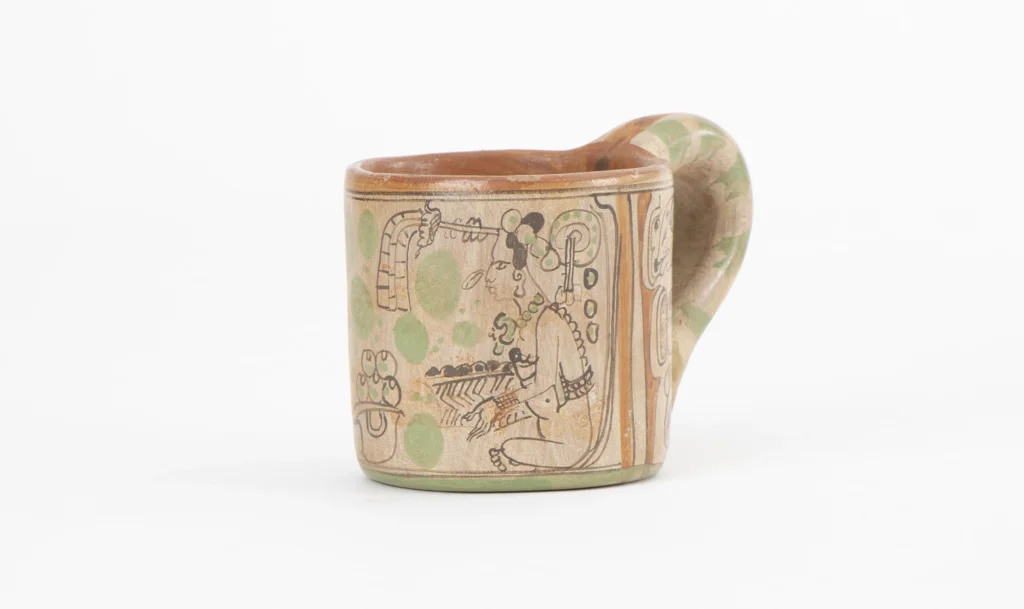
It is an honor to present our exclusive Mayan-style ceramic chocolate pots, each handcrafted by master potters and meticulously decorated with figurative scenes and hieroglyphic script inspired by pre-Hispanic iconography. These finely crafted pieces are the perfect way to connect deeply with the past while enjoying the warmth of your favorite beverage. You can learn more about the wonderful techniques of Mesoamerican archaeological ceramics at https://historicas.unam.mx/publicaciones/publicadigital/libros/095/ceramica-arqueologica.html.
FREQUENT QUESTIONS
Why was cacao considered divine by ancient peoples?
It was considered divine because, according to sacred texts such as the Popol Vuh, the cacao tree was a direct gift from the gods to humanity; it represented the blood of the earth and served as a unifying element in spiritual communication between humans and their creators.
How was cocoa traditionally prepared?
The drink was prepared by roasting the seeds over a fire, grinding them with a stone until a paste was formed, and mixing it with water, chili peppers, wild honey, or achiote. The liquid was then repeatedly poured back and forth between two containers to create a thick foam, resulting in a dark, bitter, and energizing drink.
Conclusion
The rich and vast history of chocolate in Mayan culture shows us that cacao is much more than just an agricultural ingredient; it is a living testament to the ingenuity, social organization, and profound spirituality of the Mesoamerican peoples. Preserving this legacy through an appreciation for ancestral cuisine and craftsmanship allows us to keep this invaluable cultural heritage alive for future generations.
Today, you can transform your tasting experience and connect with the mysticism of pre-Hispanic Mexico by purchasing one of our Mayan-style ceramic chocolate pots, adorned with deities and glyphs, while enjoying the food of the gods with the reverence of ancient times. Click here to visit our store and take home a true work of art steeped in history! https://decorazonmexico.com/producto/chocolatera/.
References
García, S. (September 17, 2025). Rituals: Cacao and Chocolate in Mayan Culture. Retrieved from El Heraldo de México. Yucatán: https://yucatan.heraldodemexico.com.mx/estilo-de-vida/2025/9/17/rituales-el-cacao-el-chocolate-en-la-cultura-maya-3290.html
Olguín Lacunza, M., & Rojas García, D. (August 23, 2017). The Maya associated cacao with the underworld. Retrieved from UNAM Global Magazine: https://unamglobal.unam.mx/global_revista/los-mayas-asociaron-al-cacao-con-el-inframundo/
Olguín Lacunza, M., & Rojas García, D. (September 2022). Cacao: From the Maya to the World. Retrieved from UNAM Global Magazine: https://unamglobal.unam.mx/global_revista/cacao-de-los-mayas-para-el-mundo-2/