Table of Contents
The Women Who Bring Life to the Isthmus of Tehuantepec
To speak of the women of Tehuantepec is to speak of one of the most representative cultural expressions of Oaxaca and Mexico. Native to the Isthmus of Tehuantepec, these women have preserved, for generations, an identity deeply rooted in Zapotec traditions, becoming a symbol of strength, leadership, and cultural pride.
Their presence goes far beyond the beauty of their attire. The women of Tehuán have played a vital role in the economic, social, and cultural life of their communities, preserving customs, celebrations, and knowledge that continue to define the region’s identity.
In this article, we’ll explore the history of these women, the richness of their traditional attire, the significance of the traditional candles, their participation in the Guelaguetza, and how their legacy continues to inspire works of Mexican folk art, such as our black clay piece “Sirena Tehuana.”
History and Legacy of the Women of Tehuán
Since pre-Hispanic times, the Isthmus of Tehuantepec has been an important hub for trade between different regions of Mesoamerica. Part of the Zapotec culture flourished in this region, and its influence remains evident in the language, traditions, and social organization of its communities.
Over the centuries, the women of Tehuán have played a prominent role in daily life on the Isthmus. Their involvement in trade, the management of markets, and the family economy has given them a leadership role that has caught the attention of historians and anthropologists around the world.
More than just a matriarchal society, the Isthmus is known for the high level of participation and economic independence of its women, who have played a decisive role in preserving the region’s cultural identity. Although people often speak of “the Tehuana woman” as a single figure, each town on the Isthmus—such as Juchitán, Tehuantepec, San Blas Atempa, El Espinal, or Santa María Xadani—preserves its own customs and variations in clothing and traditions. What they share is a pride in keeping this important cultural legacy alive.
The traditional clothing of Tehuana women
One of the most recognizable elements of Zapotec culture is, without a doubt, the traditional dress of the Tehuanas.
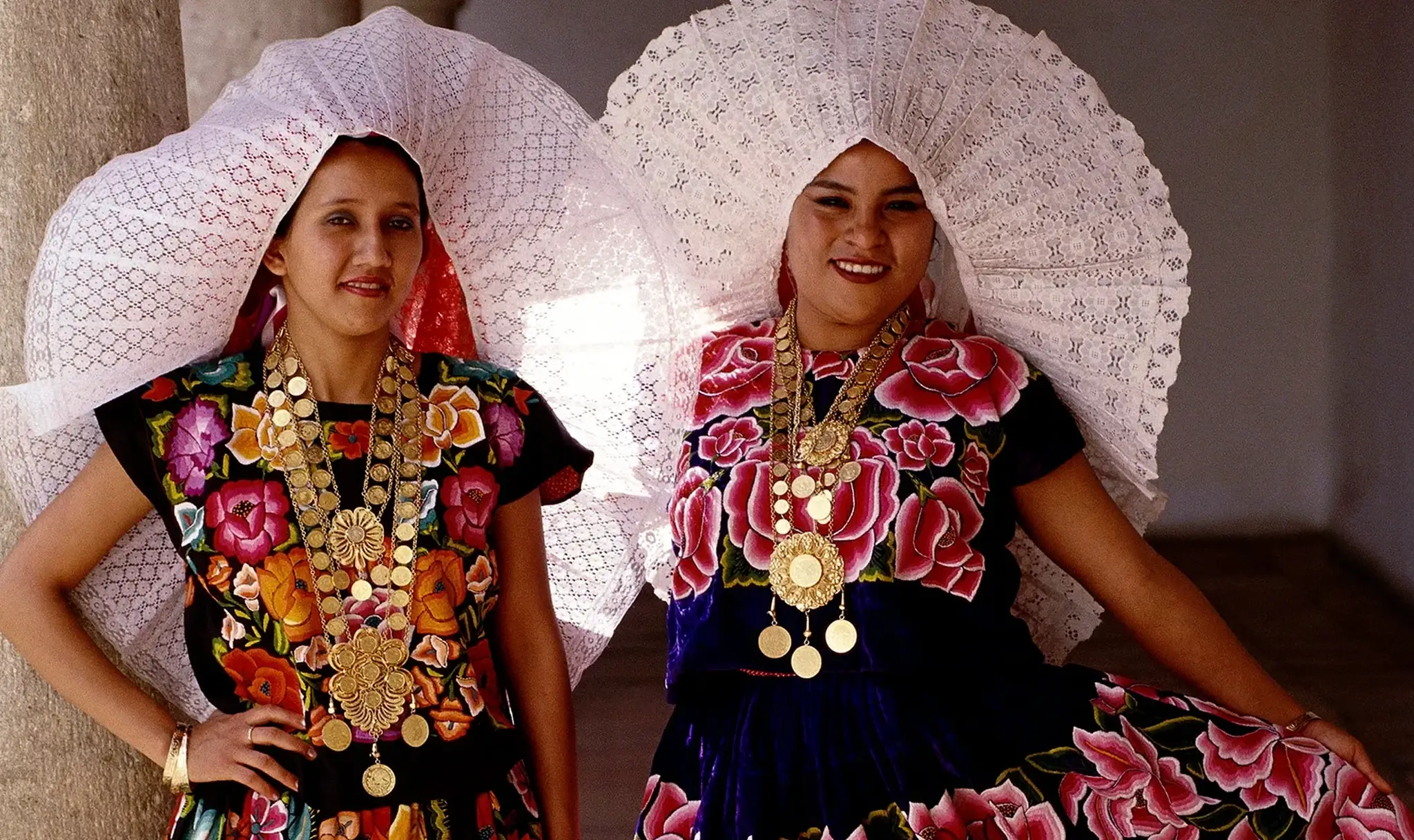
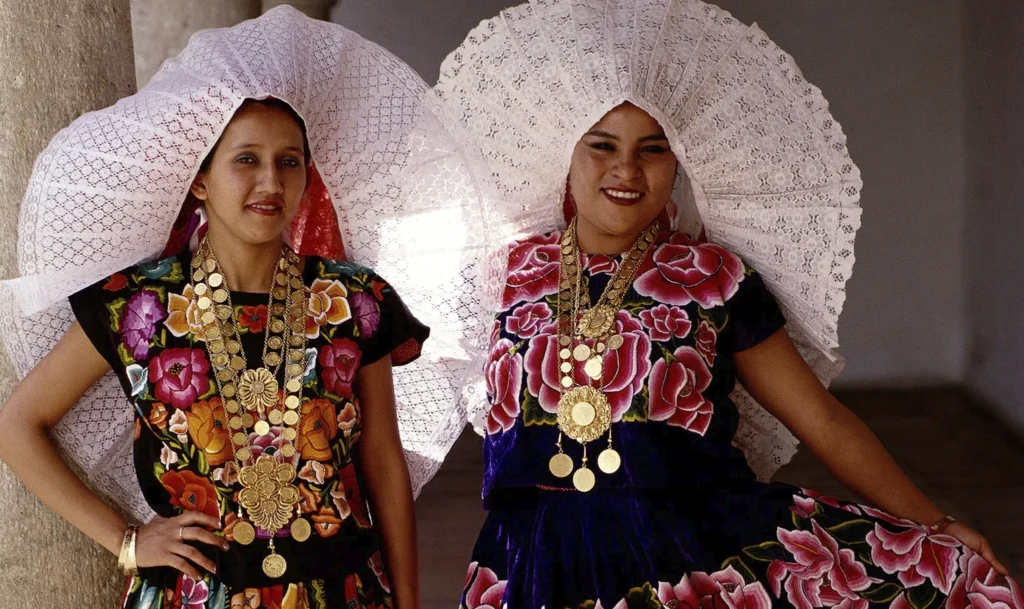
This attire consists mainly of the huipil and the enagua, garments made of velvet, satin, or other fabrics on which skilled artisans create delicate floral embroidery entirely by hand. Each design reflects the talent, patience, and knowledge passed down from generation to generation.
The resplandor—an elaborate lace headdress that frames a woman’s face—is also worn during religious ceremonies and important celebrations, and has become one of the most iconic elements of this attire.
The costume is usually accessorized with gold filigree jewelry, necklaces, bracelets, and traditional chokers—pieces that are part of the cultural heritage of the Isthmus of Tehuantepec.
Las Velas: The Isthmus’s Grand Celebration
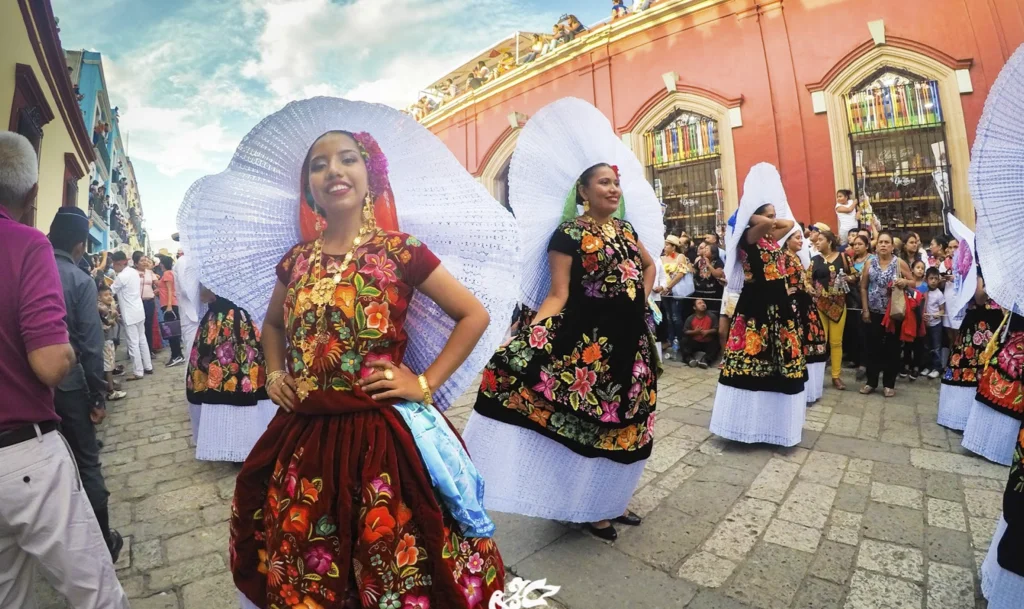
One of the region’s most important traditions is the “Velas,” celebrations that bring families and communities together to honor the patron saints of each neighborhood.
More than just a religious festival, the Velas provide a space for community where music, cuisine, dance, and Zapotec identity take center stage. For months, families plan every detail to welcome hundreds of guests to one of the most eagerly anticipated celebrations of the year.
The women of Tehuán play an essential role in this tradition. They are the ones who actively participate in organizing the festivities and wear their finest costumes during the dances and processions, becoming the most iconic symbol of these celebrations.
La Guelaguetza and Zapotec Pride
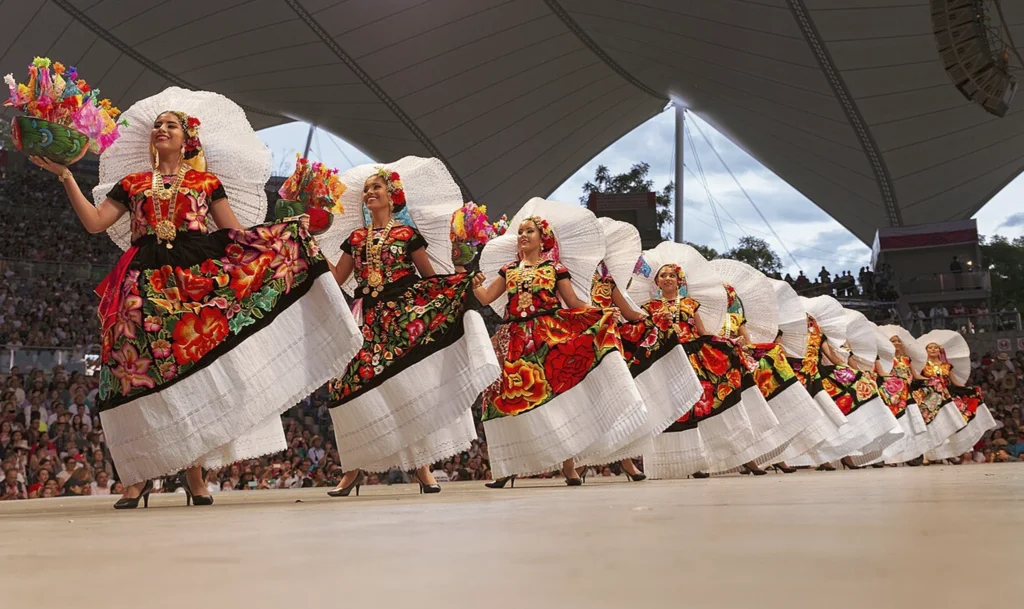
The Tehuanas also play a prominent role during the Guelaguetza, considered the state of Oaxaca’s most important cultural celebration.
Every year, the delegation from the Isthmus of Tehuantepec presents some of the most eagerly anticipated dances on the program, including *La Sandunga* and *La Llorona*, which showcase to the audience the richness of their music, the elegance of their costumes, and the deep roots of Zapotec traditions.
The Tehuana Mermaid: A Tribute in Black Clay
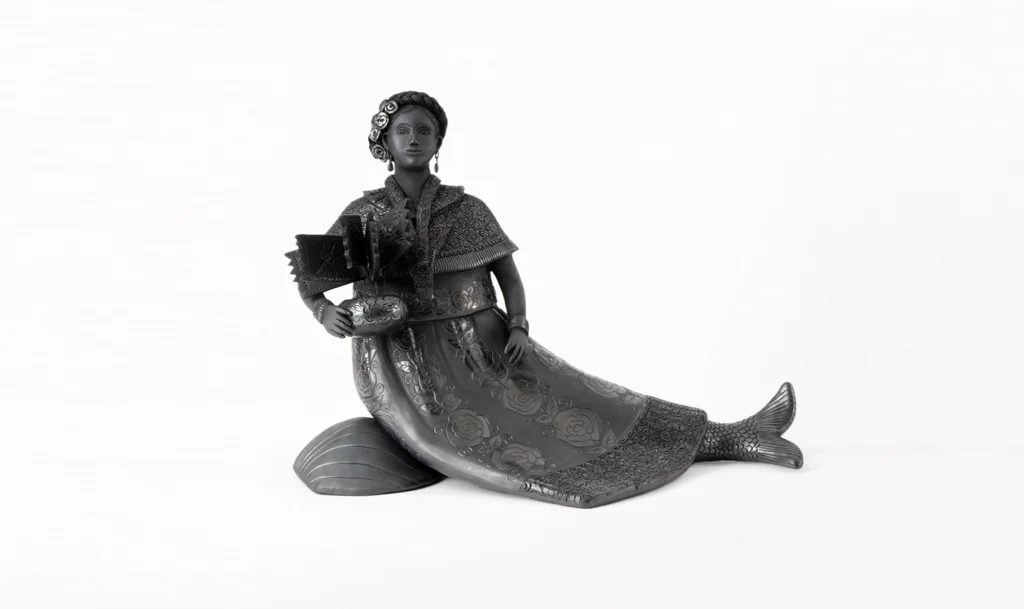
The strength and beauty of the women of Tehuán have inspired numerous Mexican artists throughout history. At DeCorazón México, we pay tribute to this legacy through our piece “Sirena Tehuana,” crafted from black clay by master artisan Magdalena Pedro Martínez, from San Bartolo Coyotepec, Oaxaca.
The sculpture blends the mythological figure of the mermaid with the elegance of traditional Tehuana dress, resulting in a work that celebrates the cultural richness of the Isthmus of Tehuantepec and the talent of Oaxacan potters.
The piece reflects the delicacy of black clay and a deep respect for one of the country’s most representative traditions.
Every detail is handcrafted and polished by hand. The elegance of her headdress captivates at first glance, while the delicate patterns on her huipil reflect hours of work, dedication, and craftsmanship, bringing a truly unique piece to life.
This piece is currently part of the DeCorazón México collection and is available at our gallery for anyone who would like to take home a work inspired by the legacy of Zapotec women.
Conclusion
The Tehuana women of the Isthmus of Tehuantepec represent much more than just traditional clothing. They reflect a tradition shared by the various Zapotec peoples of the Isthmus of Tehuantepec, who for centuries have preserved their identity, their customs, and the fundamental role of women in the social and cultural life of southern Mexico.
From the traditional Velas to the Guelaguetza, their legacy continues to inspire new generations and artists who find in them an inexhaustible source of creativity.
We invite you to visit our gallery and discover pieces that keep Mexican folk art alive.
References
Cueto, J. C. (May 31, 2024). The Isthmus of Tehuantepec: The Region of Mexico Where Women Have Held Power for Centuries. BBC News Mundo. https://www.bbc.com/mundo/articles/c4nnp6e07mro
Mexico Desconocido. (n.d.). The Tehuana costume: a treasure of the Isthmus of Tehuantepec. Unknown Mexico